
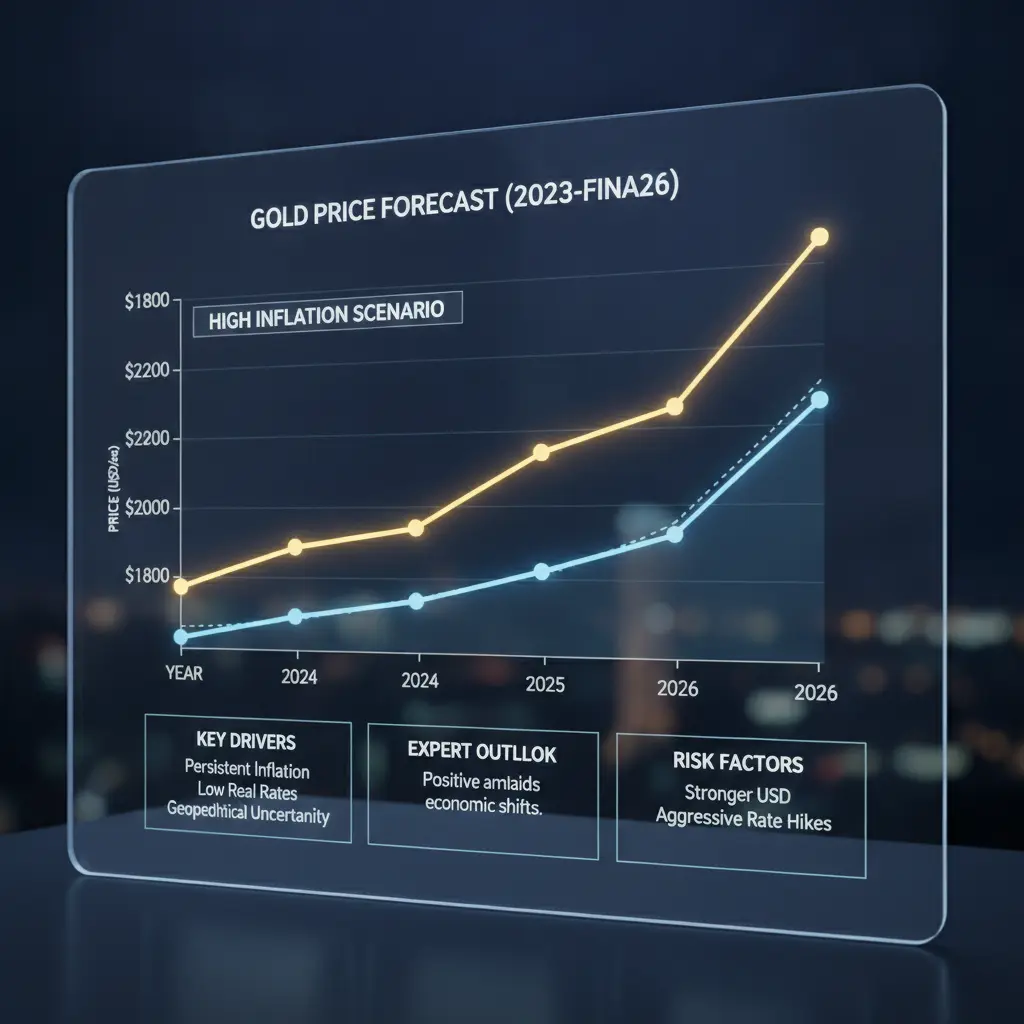
The year is 2026, and the specter of elevated inflation, once deemed ‘transitory,’ continues to cast a long shadow over global economies. For investors grappling with diminishing purchasing power, the question of what happens to gold prices has become more pressing than ever. As CBS News explores, experts remain divided, but a clearer picture is emerging from the complex interplay of economic forces.
Historically, gold has been revered as a quintessential inflation hedge, a tangible asset whose value often rises when fiat currencies falter. As inflation metrics stubbornly remained above central bank targets through 2024 and 2025, many expected a gold rally of monumental proportions. Indeed, the precious metal has seen significant gains, solidifying its role as a safe haven. However, its trajectory hasn’t been a simple upward climb.
The Bullish Case: A Store of Value in Perilous Times
Dr. Anya Sharma, Chief Economist at Global Insights Group, notes, “When inflation becomes entrenched, the real yield on traditional fixed-income assets often turns negative. In such an environment, gold’s appeal as a non-yielding asset is actually enhanced because its opportunity cost relative to bonds shrinks. We’ve seen central banks globally continue to diversify reserves into gold, reinforcing this foundational demand.” Sharma predicts that as long as real interest rates struggle to turn positive, gold will maintain its upward momentum, potentially reaching new all-time highs as investors seek to preserve wealth.
The Counter-Argument: Other Forces at Play
Conversely, Mark Jensen, Senior Portfolio Manager at Apex Capital, offers a more nuanced perspective. “While inflation certainly provides a tailwind, we cannot ignore the impact of central bank tightening,” Jensen explains. “If central banks are forced to maintain higher nominal interest rates to combat persistent inflation, the dollar can strengthen, and the appeal of cash-generating assets might rise for some investors, creating headwinds for gold.” He points out that while gold has performed well, it has also experienced pullbacks linked to aggressive rate hike cycles or periods of significant dollar strength. “It’s not just about inflation; geopolitical stability, mining supply, and investor sentiment also dictate gold’s dance.”
The Path Forward: Volatility and Resilience
Consensus suggests that gold will likely remain a critical component of diversified portfolios in an era of sustained inflation. Its performance may not always be a straight line up, as various macroeconomic factors — including global economic growth, currency fluctuations, and geopolitical tensions — will continue to exert influence.
However, the core rationale for gold’s existence as a hedge against currency debasement and economic uncertainty holds strong. Experts widely agree that for as long as inflation remains elevated through 2026 and potentially beyond, gold’s fundamental role as a protector of purchasing power will ensure its continued relevance and demand, making it a cornerstone asset for those navigating the ongoing inflationary landscape. Read More
Leave a Reply
You must be logged in to post a comment.