
Gold’s Shifting Sands: Why 2026 Could Be a Struggle for the Yellow Metal
Published on KITCO, Thursday, June 25, 2026
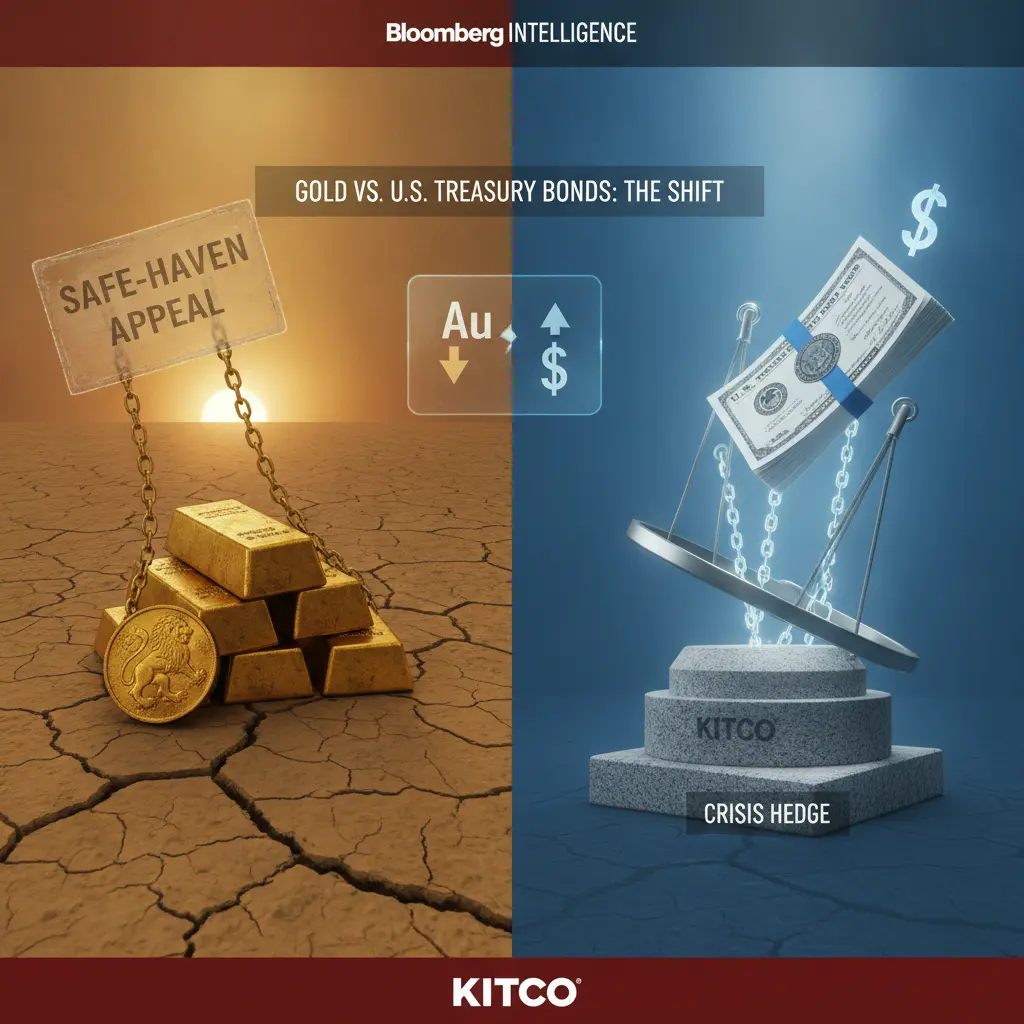
The venerable appeal of gold as the ultimate safe haven could be facing its most significant challenge yet, with Bloomberg Intelligence’s senior commodity strategist, Mike McGlone, projecting a period of struggle for the yellow metal through 2026. McGlone’s analysis, gaining traction across financial markets, suggests that gold is increasingly relinquishing its coveted safe-haven status to an unexpected contender: U.S. Treasury bonds.
For centuries, gold has been the bedrock of portfolios during times of economic uncertainty, geopolitical turmoil, and inflationary pressures. Its tangible nature and historical resilience have made it an indispensable component for wealth preservation. However, the current financial landscape, characterized by evolving monetary policies and shifting investor sentiment, appears to be reshaping this long-held perception.
McGlone posits that in an environment where central banks, particularly the Federal Reserve, are actively managing liquidity and interest rates, the perceived safety and liquidity of U.S. government debt are becoming more attractive than gold. “The benchmark U.S. Treasury bond, offering both yield and unparalleled liquidity, is increasingly seen as the primary flight-to-safety asset,” McGlone reportedly stated, indicating a significant recalibration of market priorities.
This isn’t merely a theoretical shift; it has tangible implications for gold’s performance. As investors flock to U.S. bonds for safety and, crucially, a yield that gold cannot offer, demand for the precious metal could soften. This dynamic could cap gold’s upside potential, making it difficult for prices to break through established resistance levels, or even leading to sustained downward pressure.
Several factors might be contributing to this re-evaluation:
- Yield vs. No Yield: In a rising interest rate environment, bonds offer a return, whereas gold does not. This “opportunity cost” becomes more pronounced when bond yields are attractive.
- Liquidity and Stability: The immense depth and liquidity of the U.S. bond market offer unmatched ease of entry and exit, vital for institutional investors seeking immediate safe haven.
- Inflation Expectations: While gold traditionally hedges against inflation, if central banks are perceived as effectively managing inflation through monetary tightening, some of gold’s appeal in this regard might diminish.
For investors, McGlone’s outlook serves as a critical warning. Those accustomed to gold’s automatic safe-haven response might need to re-evaluate their asset allocation strategies. While gold will undoubtedly retain its intrinsic value and cultural significance, its role as the primary crisis hedge might be undergoing a profound transformation.
As we navigate through 2026, the performance of gold will be a litmus test for this evolving market dynamic. The battle for safe-haven supremacy between the ancient metal and modern sovereign debt is set to define investment trends for the foreseeable future. Read More
Leave a Reply
You must be logged in to post a comment.