Gold’s Shimmering Path: A Look Ahead to the Second Half of 2026
As we stand on the cusp of the second half of 2026, the question on every investor’s mind echoes louder than a central bank’s rate hike announcement: Where are gold prices headed? The yellow metal, a timeless beacon of wealth and a quintessential safe-haven asset, has navigated a complex economic landscape thus far. But what do the coming months hold for its glittering trajectory?
The first half of the year has seen gold’s resilience tested by a myriad of global forces. Inflationary pressures, though showing signs of moderation in some regions, remain a persistent concern. Central banks continue to walk a tightrope, balancing economic growth against price stability, and their interest rate policies will undoubtedly cast a long shadow over gold’s appeal.
Key Influencers on Gold’s Horizon:
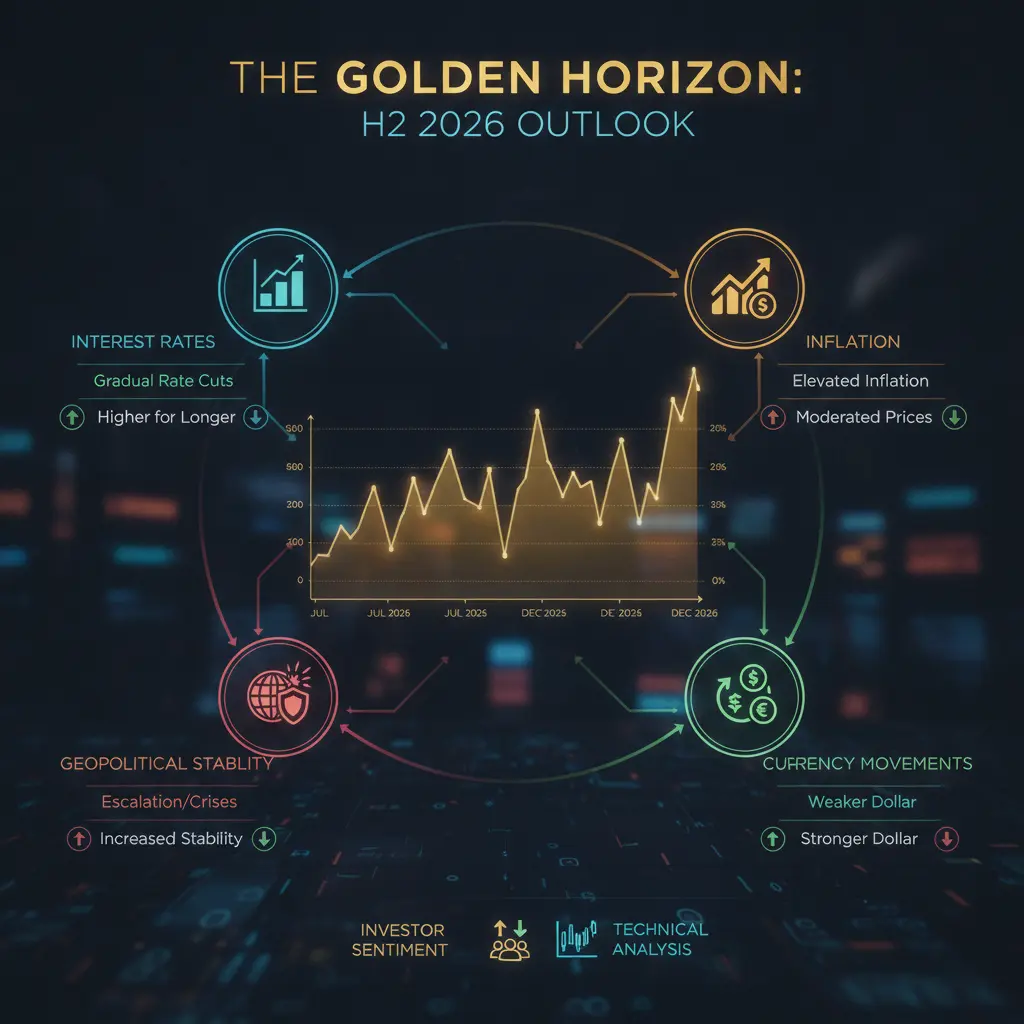
- Monetary Policy & Interest Rates: The Federal Reserve and other major central banks’ decisions on interest rates will be paramount. Higher rates typically increase the opportunity cost of holding non-yielding assets like gold. However, an unexpected dovish pivot or renewed quantitative easing could send gold soaring.
- Geopolitical Landscape: The world remains a tapestry of shifting alliances and regional tensions. Any escalation of geopolitical instability – be it economic sanctions, trade disputes, or outright conflicts – historically bolsters gold’s appeal as a safe haven, driving demand from both institutional and retail investors.
- U.S. Dollar Strength: Gold and the U.S. dollar often share an inverse relationship. A strengthening dollar can make gold more expensive for international buyers, while a weakening dollar tends to have the opposite effect, making gold more attractive.
- Inflationary Expectations: Should inflation prove more ‘sticky’ than anticipated, gold’s traditional role as an inflation hedge will come to the forefront, potentially pushing prices higher as investors seek to preserve purchasing power.
- Industrial & Investment Demand: Beyond financial markets, physical demand from the jewellery sector, central bank purchases, and technological applications also plays a crucial role. Emerging market demand, in particular, can be a significant underlying support.
The Expert Consensus:
While crystal balls remain elusive in financial forecasting, many analysts anticipate a period of continued volatility but with an underlying bullish bias for gold in the latter half of 2026. The confluence of potential slowing global growth, persistent (even if moderating) inflation, and an ever-present undercurrent of geopolitical uncertainty forms a compelling narrative for gold. Central bank diversification away from fiat currencies and into physical gold is also a trend that shows no signs of abating.
Investors would be wise to monitor these key indicators closely. Gold’s journey in the coming months promises to be a fascinating study of market dynamics, reflecting the complex interplay of economic reality and investor sentiment. Whether it ascends to new heights or consolidates its recent gains, gold’s enduring allure as a fundamental asset in any diversified portfolio remains undisputed. Read More
Leave a Reply
You must be logged in to post a comment.