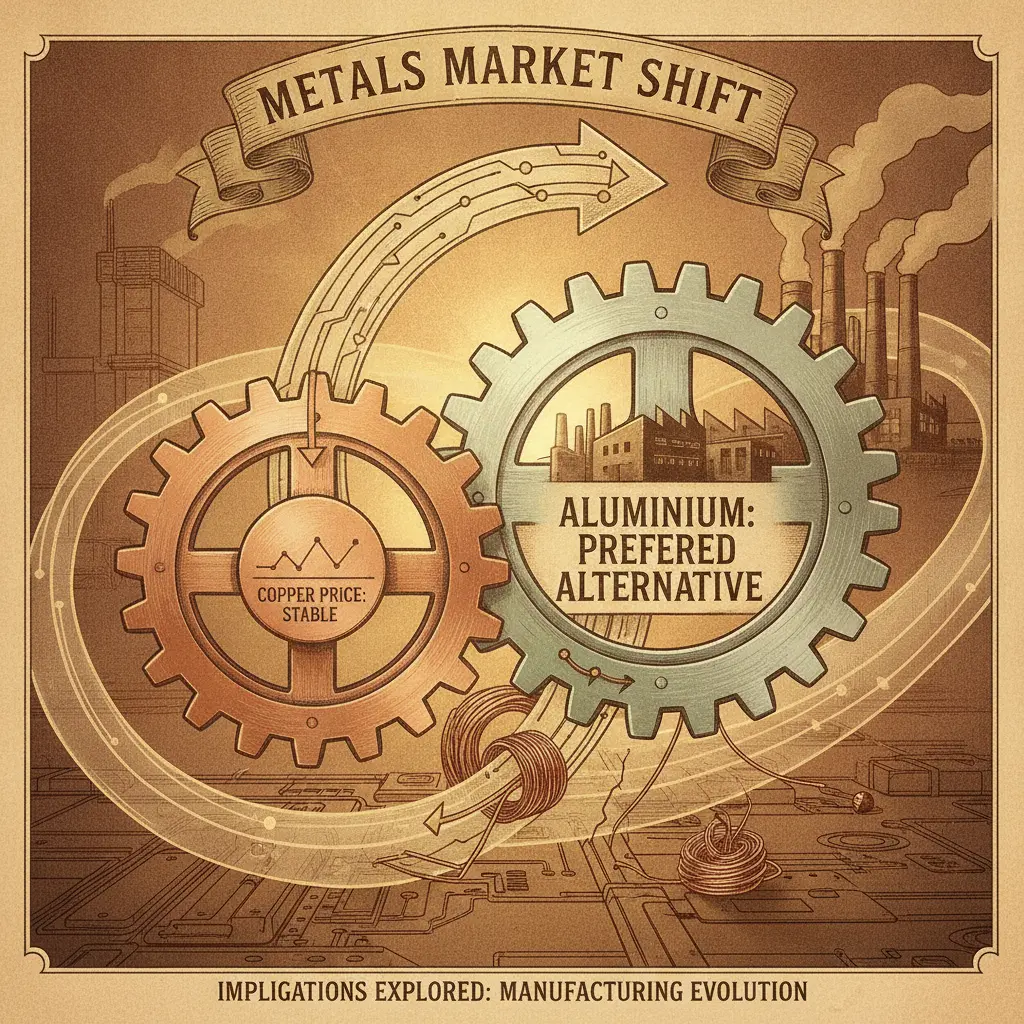
In the dynamic world of industrial metals, a significant shift is underway, with aluminium increasingly positioned as a viable alternative to traditional copper in various manufacturing applications. As of now, the live Copper price stands at $0.43 USD per troy ounce, reflecting a stable market with 0% change over the last 24 hours (a change of $0). Despite this current stability, the broader narrative, highlighted recently by The Economic Times, points to aluminium’s growing preference among manufacturers.
The appeal of aluminium stems from a combination of factors, primarily its cost-effectiveness and relatively abundant supply compared to copper. Industries ranging from electrical wiring and automotive components to construction and consumer electronics are re-evaluating their material choices. While copper boasts superior electrical conductivity and ductility, advances in aluminium alloy technology have made it a compelling substitute, offering sufficient performance for many uses at a lower price point.
Manufacturers are driven by the need to optimize production costs and secure reliable material sourcing. The transition isn’t about replacing copper entirely, but rather a strategic diversification. For instance, in power transmission lines, the lighter weight of aluminium allows for longer spans and fewer support structures, yielding significant infrastructure savings. However, copper’s enduring strength lies in applications demanding the highest conductivity, corrosion resistance, and specific thermal properties where its performance remains unparalleled.
This evolving landscape suggests that while copper will continue to be a vital commodity, particularly in high-performance and specialized sectors, the rise of aluminium as a cost-effective alternative could influence future demand trends and market dynamics. Investors and industry watchers alike will be keen to observe how this competition unfolds, shaping the long-term valuations of both metals. Read More
Leave a Reply
You must be logged in to post a comment.