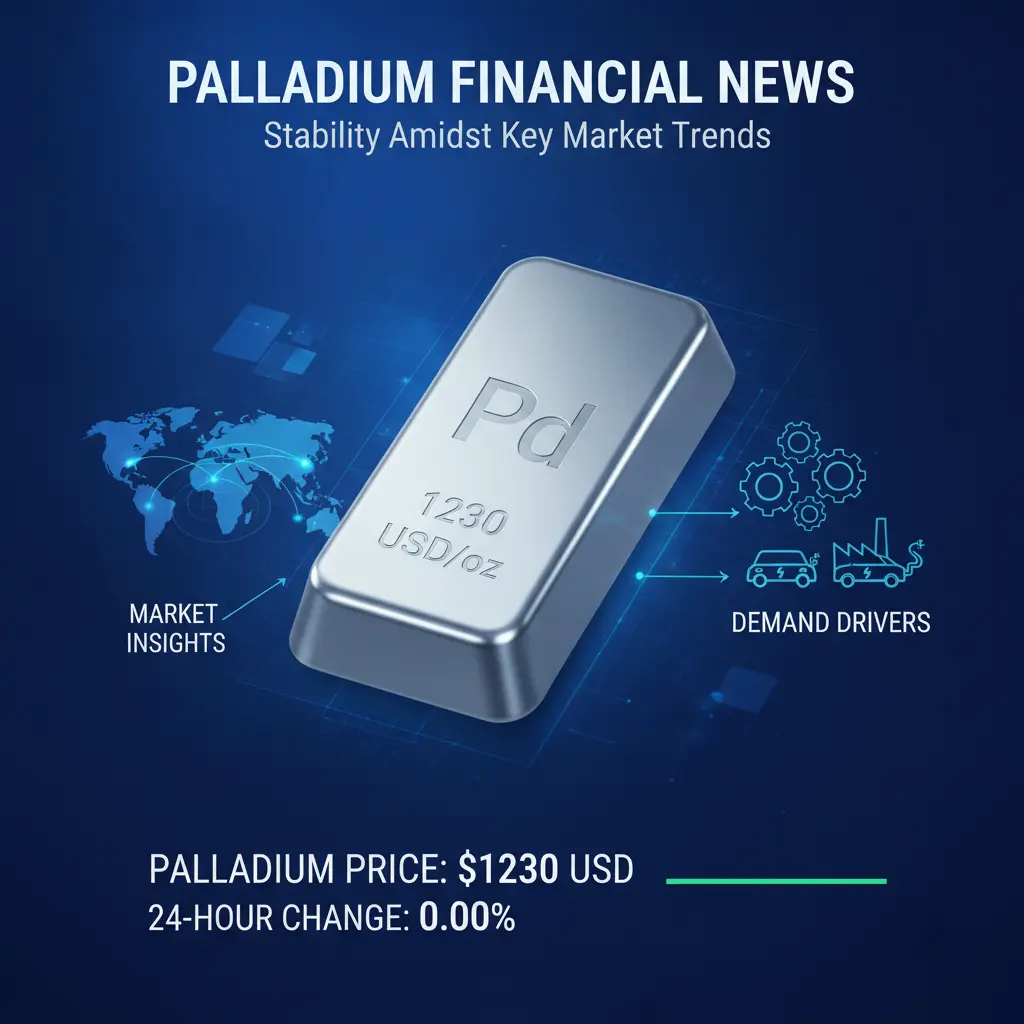
Palladium, the enigmatic precious metal, is currently commanding attention in the financial markets for its remarkable steadfastness. As of today, the price of Palladium sits precisely at $1230 USD per troy ounce. This valuation reflects a period of distinct stability, with the metal showing no movement whatsoever over the last 24 hours, registering a 0% change or a $0 increase. This calm in the market, as noted in various overviews including those from prominent exchanges like CME Group, often prompts investors and analysts to delve deeper into the underlying factors influencing its long-term trajectory.
The primary driver of Palladium’s demand remains the global automotive industry, where its unique catalytic properties are indispensable in vehicle exhaust systems to mitigate harmful emissions. With increasing environmental regulations worldwide, this industrial demand component is expected to persist as a foundational pillar for Palladium’s market. However, Palladium’s utility extends beyond cars; it’s also a crucial material in fine jewelry, advanced dentistry, and high-tech electronics, ensuring a diversified demand portfolio.
On the supply side, the market is significantly influenced by output from a concentrated number of mining regions, predominantly Russia and South Africa. This geographical concentration can introduce volatility, as geopolitical shifts or operational disruptions in these key areas can have a magnified impact on global supply. The current equilibrium, marked by the unchanged price, could indicate a balance between these supply and demand forces, or perhaps a period where traders are awaiting fresh catalysts to dictate the next market direction.
For those tracking its performance, a visit to Talupa offers the most up-to-date information on the live Palladium price. While today’s market appears dormant, the intrinsic value and vital industrial applications of Palladium continue to underscore its enduring importance in the precious metals landscape. The stillness provides a moment for participants to assess the broader economic climate and its potential impact on this essential commodity. Read More
Leave a Reply
You must be logged in to post a comment.