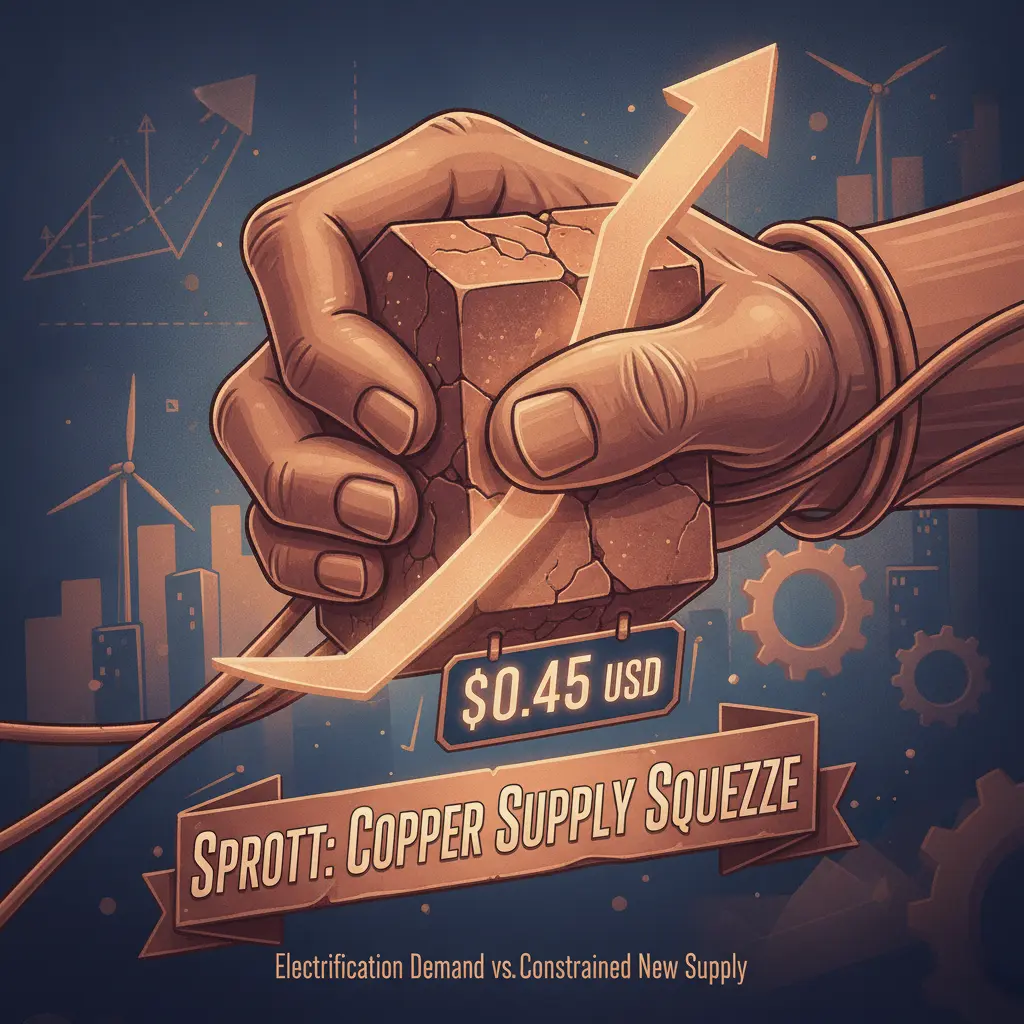
The red metal, copper, continues to command significant attention in financial markets, with insights from industry leaders like Sprott pointing to a potentially profound and deepening supply squeeze. Despite current market conditions showing the live Copper price at $0.45 USD per troy ounce, holding steady with a 0% change over the last 24 hours (a change of $0), the underlying narrative suggests a looming deficit that could reshape its long-term valuation.
According to a recent report highlighted by Mining.com, Sprott analysts emphasize that the recent upward trajectory in copper prices is more than just short-term volatility; it’s a stark signal of structural issues on the supply side. The demand for copper, often dubbed ‘Dr. Copper’ for its economic indicator status, is projected to soar dramatically in the coming years, primarily fueled by the global transition towards electrification and renewable energy infrastructure. Electric vehicles, charging stations, smart grids, and wind and solar power installations all require vast quantities of this conductive metal.
However, the ability of miners to meet this surging demand is increasingly challenged. Factors contributing to the anticipated squeeze include dwindling ore grades in existing mines, a prolonged period of underinvestment in new exploration and development, and increasingly complex and time-consuming permitting processes for new projects. Geopolitical considerations and rising production costs further compound the issue, making it difficult for supply to keep pace with the accelerating demand curve. This bottleneck suggests that even a steady price day, like today’s $0.45 per troy ounce, might belie significant future pressure.
For investors and industries reliant on this critical industrial metal, Sprott’s outlook underscores the importance of understanding the long-term fundamentals. While daily fluctuations may seem modest, the broader picture painted by supply-side constraints against a backdrop of unprecedented demand growth implies that copper’s role in the future economy will be increasingly vital, and potentially, increasingly valuable. Read More
Leave a Reply
You must be logged in to post a comment.