The precious metals market is keenly watching every signal from central bankers, and recent comments from former Federal Reserve Governor Kevin Warsh have once again brought inflation concerns to the forefront. Warsh’s assertion that the Federal Reserve still has ‘work to do’ on inflation has resonated across financial markets. Such hawkish rhetoric typically implies that interest rates may remain elevated for longer, a scenario that historically creates headwinds for non-yielding assets like gold.
When central banks maintain a firm stance against inflation, often through higher interest rates, the opportunity cost of holding gold increases. Investors may opt for interest-bearing alternatives that offer a return, making the yellow metal less attractive. This fundamental dynamic usually translates into downward pressure on gold prices, as its appeal as a safe haven or inflation hedge is tempered by the allure of guaranteed yields elsewhere.
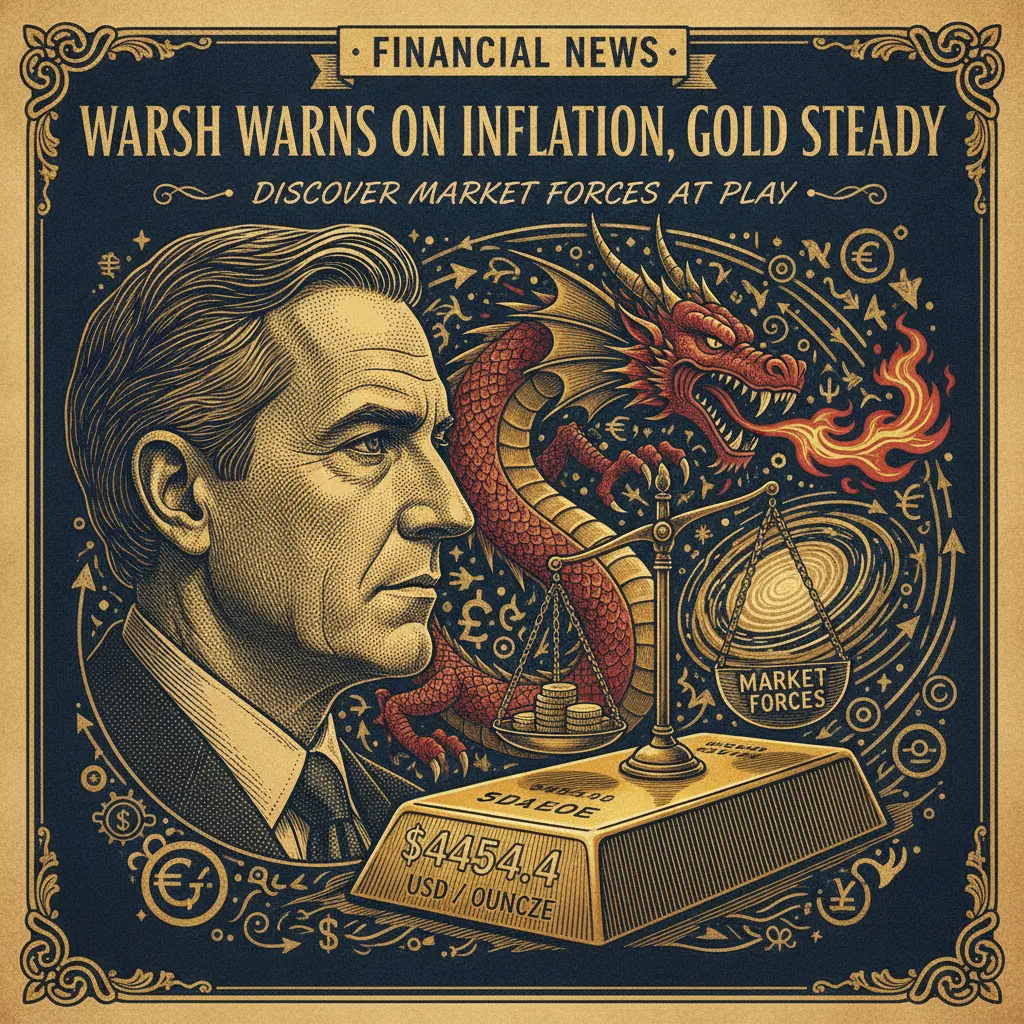
However, despite these underlying pressures and the prevailing sentiment indicated by recent headlines, the current market for gold is exhibiting notable resilience. As of the latest data, the live Gold price is holding firm at $4454.4 USD per troy ounce. Over the past 24 hours, gold has registered a 0% change, maintaining its value with a flat $0 movement. This stability, in the face of warnings like Warsh’s, suggests a complex interplay of market forces. While the specter of persistent inflation and a vigilant Fed typically dampens gold’s appeal, other supportive factors, potentially including ongoing geopolitical uncertainties, robust central bank demand, or strategic long-term investor positioning, might be providing a crucial floor for prices.
Investors are now carefully weighing the implications of a potentially prolonged period of elevated interest rates against gold’s traditional role as an ultimate store of value. Warsh’s warning serves as a stark reminder that the battle against rising costs is far from over, ensuring that market participants will remain highly sensitive to future economic data and subsequent communications from the Federal Reserve. The current equilibrium in gold’s price points to a market caught between traditional monetary policy influences and persistent underlying demand. Read More
Leave a Reply
You must be logged in to post a comment.