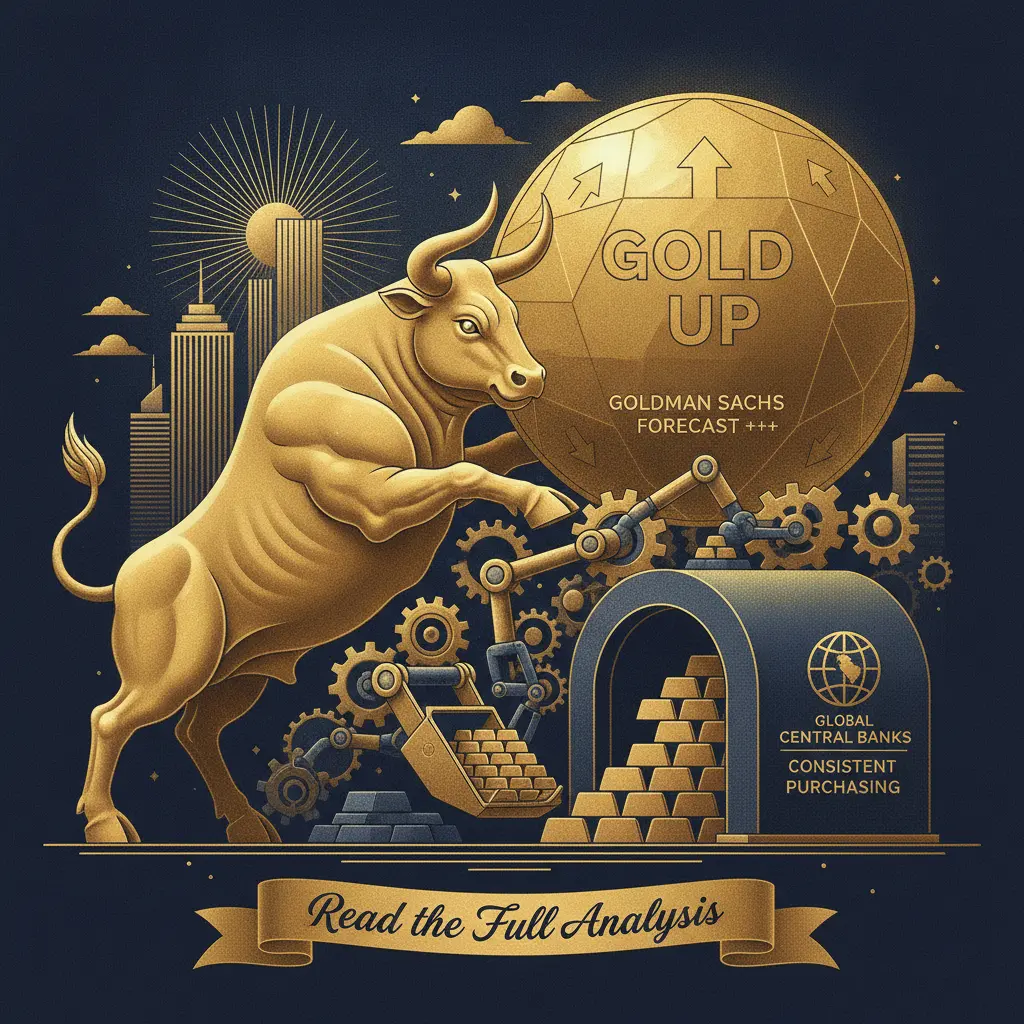
Gold is poised for significant gains, according to a recent forecast from Goldman Sachs. The esteemed investment bank highlights robust purchasing by global central banks as a primary driver for the precious metal’s upward trajectory. This renewed interest from official institutions underscores gold’s enduring appeal as a safe-haven asset and a hedge against economic uncertainties.
Currently, the live Gold price stands at $4454.4 USD per troy ounce. The metal has seen no significant change over the last 24 hours, remaining stable with a 0% movement (a change of $0). This stability provides a calm backdrop as analysts eye the potential for future appreciation driven by fundamental shifts in demand.
Central banks have been net buyers of gold for years, a trend that appears to be accelerating. Their motivations are multifaceted, ranging from diversifying reserves away from traditional fiat currencies like the U.S. dollar, to hedging against inflation and geopolitical risks. In an increasingly complex global economic landscape, gold offers a tangible store of value that is independent of any single nation’s monetary policy. Goldman Sachs’ analysis suggests this strategic accumulation is set to continue, providing a strong floor and potential catalyst for higher prices.
For investors, the consistent demand from such significant players signals a bullish long-term outlook. While daily price movements can be modest, as seen with today’s 0% change, the underlying institutional buying pressure suggests a powerful force that could push gold values higher in the coming months and years. This forecast reinforces gold’s role not just as a speculative commodity, but as a crucial component of national financial stability strategies, inevitably impacting its market valuation.
As central banks continue to bolster their gold reserves, the precious metal’s forecast remains bright. Goldman Sachs’ latest projection reinforces the sentiment that gold’s intrinsic value and its perceived role in a volatile global economy will continue to drive its ascent. Read More
Leave a Reply
You must be logged in to post a comment.