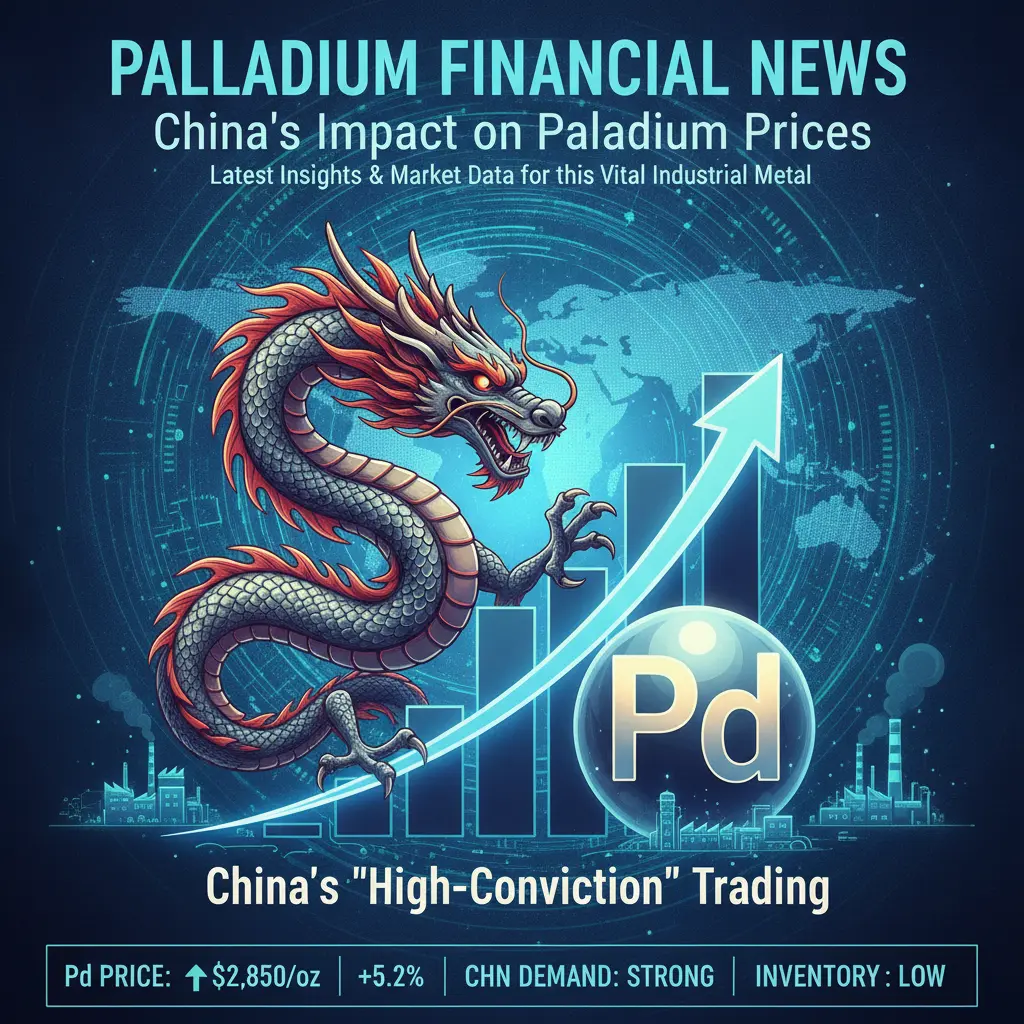
Precious metals markets are abuzz with reports of significant trading activity emanating from China, specifically impacting both platinum and palladium. BullionVault recently highlighted what it terms China’s ‘high-conviction’ trading, a strategy characterized by strong, decisive movements in particular assets. This aggressive positioning from one of the world’s largest economies often signals a shifting sentiment or an anticipation of future demand, driving market attention to these industrial precious metals.
Palladium, primarily known for its critical role in catalytic converters in gasoline-powered vehicles, is particularly sensitive to industrial demand forecasts. China’s robust economic activity and massive automotive industry make its trading patterns a key indicator for the metal’s trajectory. When Chinese traders exhibit ‘high-conviction,’ it suggests a strong belief in either current or future scarcity, or an expected surge in industrial consumption, potentially leading to price rallies.
Despite the broader market excitement around these reports, the immediate impact on Palladium’s live market data shows stability. The live Palladium price currently stands at $1346 USD per troy ounce. Over the last 24 hours, the metal has shown a steady performance, reflecting a 0% change, equating to no dollar movement. This immediate stability, however, does not diminish the long-term implications of China’s sustained interest. Analysts are closely watching for how this ‘high-conviction’ trading might translate into future price movements, especially given Palladium’s constrained supply and crucial role in global emissions reduction efforts.
Investors and industrial consumers alike will be monitoring China’s economic signals and automotive production figures. Any sustained increase in demand, amplified by decisive trading from major players, could quickly shift the current equilibrium. The narrative underscores the intricate dance between industrial utility, speculative trading, and macroeconomic factors that continually shape the precious metals landscape. Read More
Leave a Reply
You must be logged in to post a comment.