
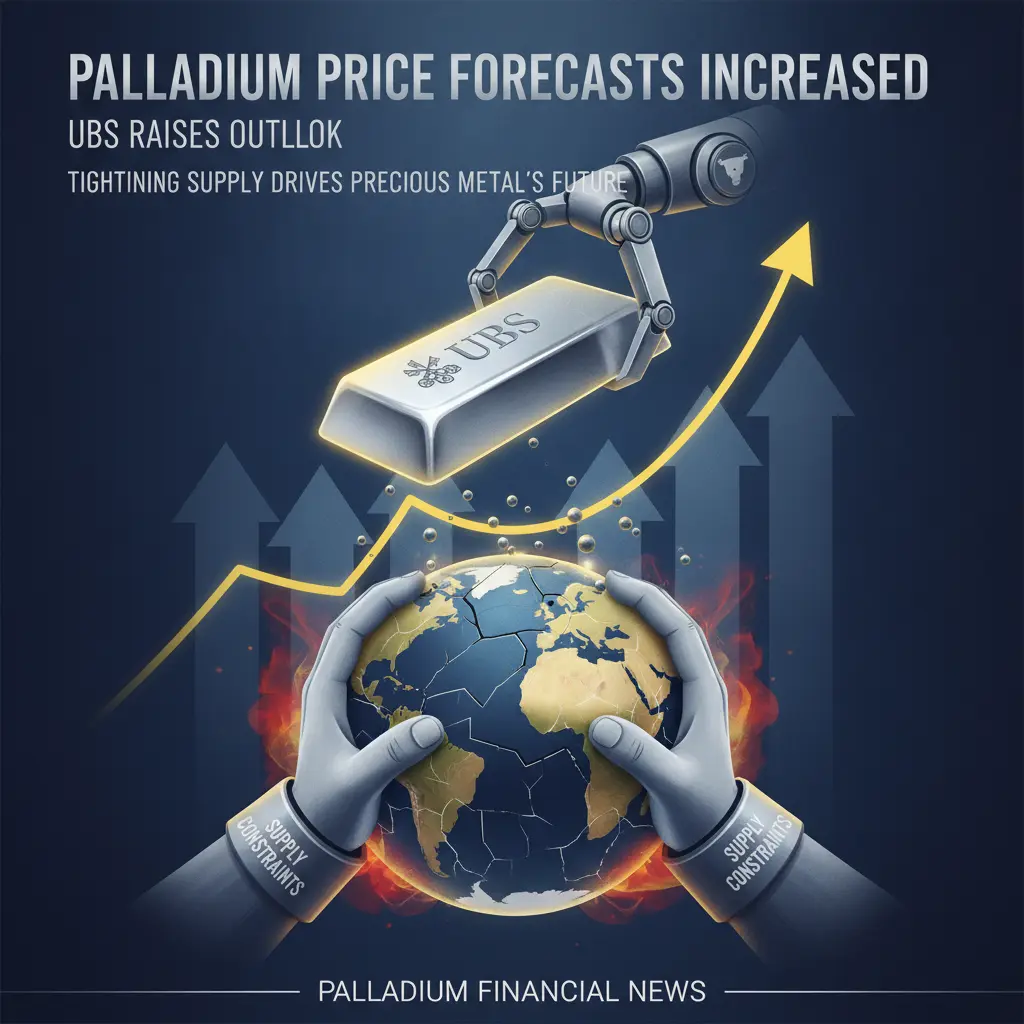
UBS, a prominent financial institution, has significantly revised its price forecasts for Palladium, citing a tightening market outlook driven by persistent supply constraints. This upward adjustment signals growing concerns within the precious metals sector regarding the future availability of this crucial industrial metal.
Palladium, primarily known for its indispensable role in catalytic converters that mitigate harmful emissions from gasoline-powered vehicles, faces ongoing challenges in its global supply chain. Mining operations, geopolitical considerations, and logistical complexities frequently contribute to the metal’s inherently constrained production. These underlying factors have led analysts to anticipate a sustained period of limited supply, which historically exerts upward pressure on prices.
For investors closely tracking the precious metals market, such an optimistic outlook from a major bank like UBS provides a strong indicator of potential future trends. Currently, the live Palladium price on Talupa stands at $1246 USD per troy ounce. Over the past 24 hours, the price has shown stability, registering a 0% change, or $0. This current equilibrium, however, is set against a backdrop of fundamental shifts in supply-demand dynamics that could pave the way for more significant movement in the mid to long term.
The automotive industry’s demand for Palladium, although evolving with the growth of electric vehicles, remains robust for internal combustion engine vehicles. Any significant disruption to the already tight supply could therefore have a substantial impact on its market value. As global environmental regulations continue to intensify, the necessity for efficient catalytic converters ensures Palladium’s enduring strategic importance. This recent forecast from UBS reinforces the view that Palladium’s market dynamics are poised for a period of heightened scrutiny and potential volatility, shaped by the intricate balance of constrained output and essential industrial demand. Read More
Leave a Reply
You must be logged in to post a comment.