
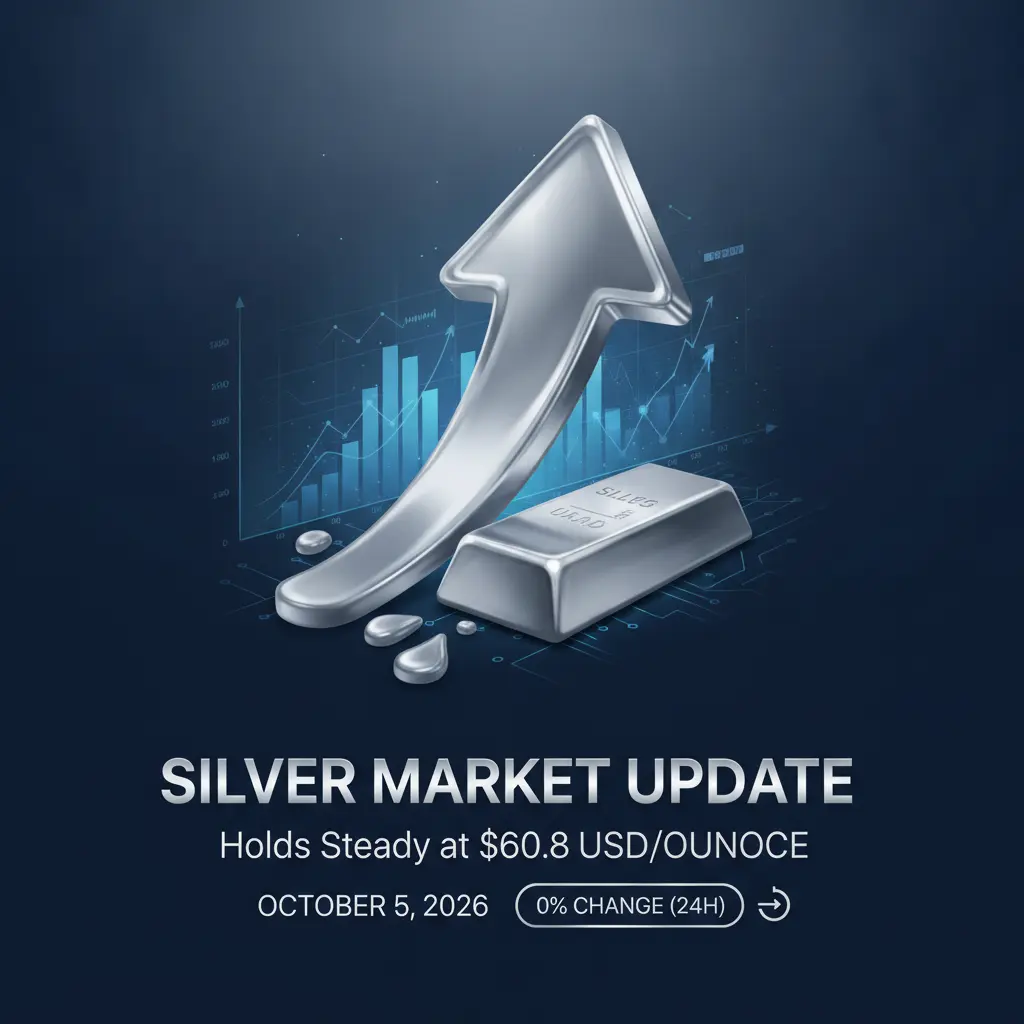
As of Monday, October 5, 2026, the precious metals market observes silver maintaining a stable trajectory, with its current live price holding firm at $60.8 USD per troy ounce. This consistent valuation comes after a 24-hour period where the metal recorded no significant change, reflecting a 0% movement or a $0 difference from its previous close.
For investors and market watchers, silver’s current steadiness often signals a period of consolidation, where the market is absorbing previous price actions and potentially setting the stage for future shifts. While gold frequently garners the lion’s share of attention, silver, with its dual role as both a monetary metal and an industrial commodity, offers unique insights into broader economic trends. Its industrial demand, spanning everything from solar panels and electronics to medical applications, makes its price movements sensitive to global manufacturing and technological advancements.
The absence of volatility over the last day, as reported on this October morning, provides a moment for reflection on the metal’s long-term prospects. Experts often consider silver to be more volatile than gold, making its current stability noteworthy. This could be interpreted in several ways: a pause before a breakout, a reflection of balanced supply and demand dynamics, or simply a calm before renewed interest from either speculative or industrial buyers.
Keeping a close eye on economic indicators, geopolitical developments, and shifts in industrial demand will be crucial for understanding silver’s next potential move. While today’s market shows no dramatic swings, the underlying fundamentals of supply, demand, and investor sentiment are always at play. For the very latest pricing and detailed charts, you can always check the live Silver price on Talupa.com. The precious metal continues to be a key asset in diversified portfolios, valued for its intrinsic worth and potential as a hedge against inflation and economic uncertainty. Its current stability, therefore, is a point of interest for those tracking its performance. Read More
Leave a Reply
You must be logged in to post a comment.