
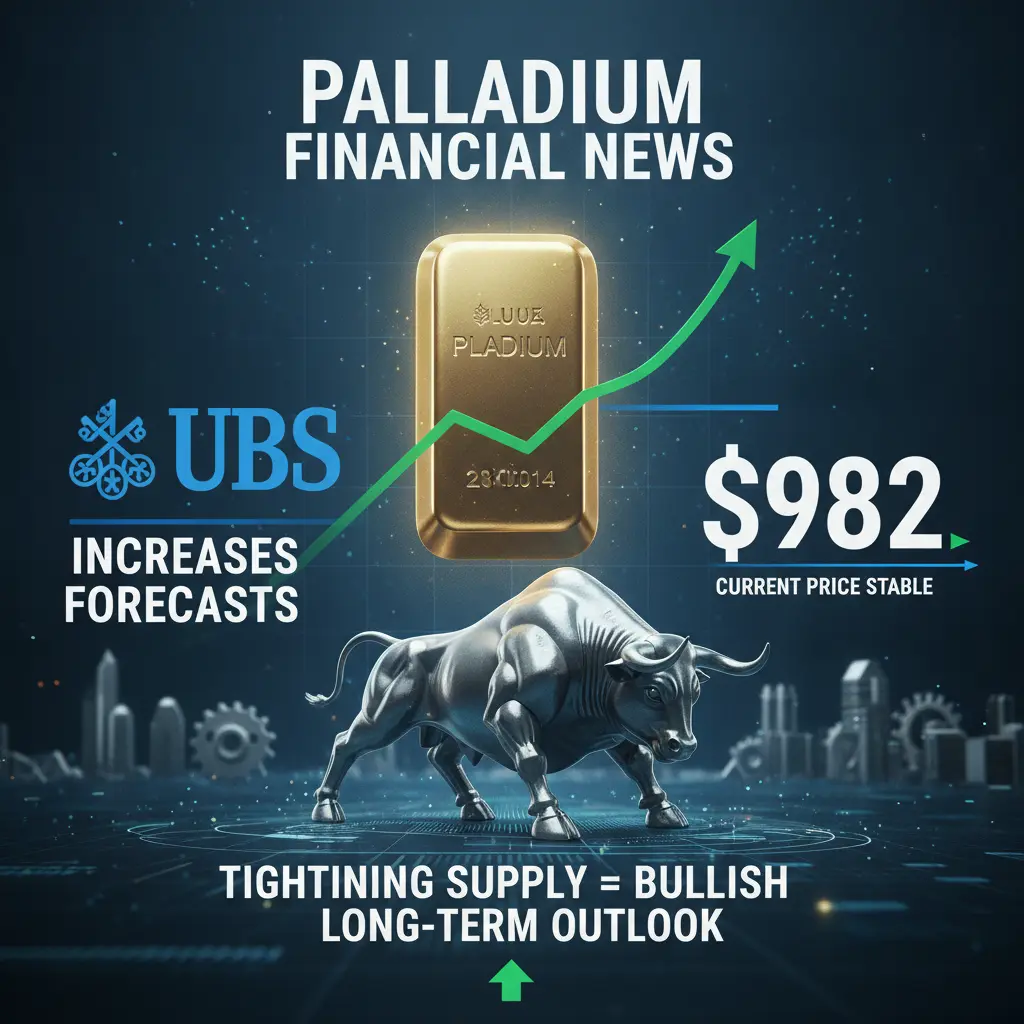
Zurich, Switzerland – Monday, September 21, 2026 – UBS, a prominent financial institution, has significantly raised its price forecasts for palladium, indicating a tightening market outlook driven by persistent supply constraints. The revised projections underscore growing concerns about the availability of the precious metal, which plays a crucial role in the automotive industry and other industrial applications.Talupa, a leading live precious-metals and cryptocurrency price site, notes that despite the bullish long-term sentiment from UBS, the immediate market for palladium remains stable. Currently, palladium is trading at $982 USD per troy ounce, having shown 0% change over the last 24 hours, equating to a $0 fluctuation. For real-time updates and detailed market analysis, investors can monitor the live Palladium price on Talupa.The core of UBS’s revised outlook stems from an assessment of global supply challenges. Palladium’s primary sources are concentrated in a few key mining regions, making its supply susceptible to geopolitical instabilities, labor disputes, and operational disruptions. These factors collectively contribute to an inelastic supply chain that struggles to meet consistent industrial demand.The automotive sector remains the largest consumer of palladium, utilizing the metal extensively in catalytic converters to reduce harmful vehicle emissions. As global environmental regulations continue to tighten, the demand for effective emissions control technologies is expected to remain robust, further exacerbating the pressure on an already constrained supply.UBS’s updated forecasts suggest that these supply-demand dynamics are likely to maintain upward pressure on palladium prices in the coming periods. While the current market exhibits short-term stability, the long-term trajectory appears to be influenced by the ongoing struggle to secure adequate supply against persistent and growing industrial needs, signaling a potentially significant shift for investors and industrial users alike. Read More
Leave a Reply
You must be logged in to post a comment.