
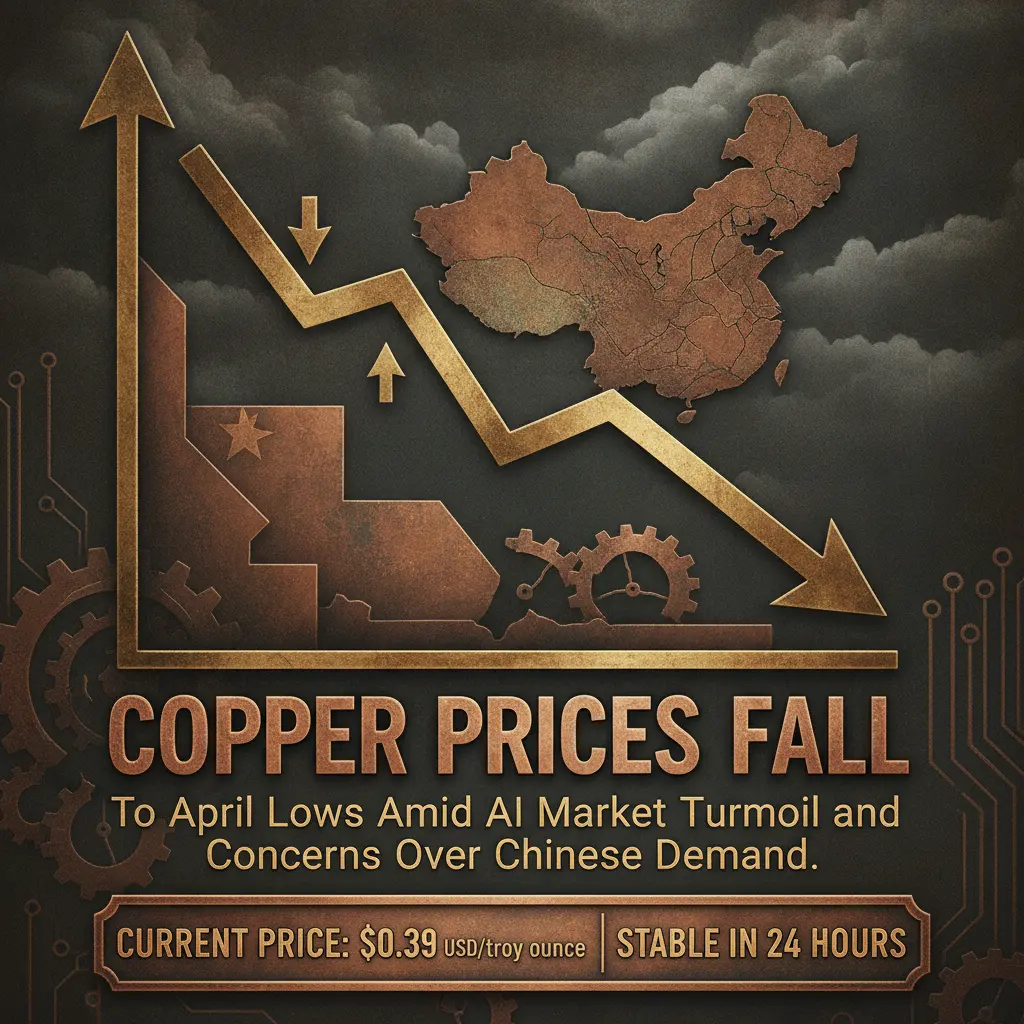
Copper, a crucial industrial metal, has seen its price fall to its lowest point since April, driven by a confluence of factors including unsettling market turbulence in the artificial intelligence sector and persistent concerns over demand from China, the world’s largest consumer. This recent downturn, as highlighted by a Wall Street Journal report, underscores the sensitive nature of commodities to global economic sentiment and specific sector performance. The metal’s value is often considered a barometer for global economic health due to its widespread use in construction, electronics, and manufacturing. Currently, the live Copper price stands at $0.39 USD per troy ounce, reflecting a stable 0% change over the last 24 hours, indicating a pause in its immediate decline but not alleviating the broader downward trend seen since April. Concerns surrounding the AI market’s volatility contribute significantly to the current anxiety. While AI’s long-term potential for driving technological advancements and new infrastructure remains high, short-term market corrections or speculative bubbles can trigger broader risk-off sentiment. Such market turmoil can lead investors to pull back from more cyclical assets like copper, anticipating a slowdown in industrial demand, particularly for large-scale projects that are copper-intensive, such as data centers. Furthermore, China’s economic outlook continues to cast a long shadow over the copper market. As the primary buyer of the red metal, any signs of weakening industrial activity, slower growth in its vast manufacturing sector, or a subdued property market directly translate into reduced demand expectations for copper. Beijing’s efforts to stimulate its economy are closely watched, but persistent challenges have kept demand forecasts subdued. The combination of a skittish AI-driven tech market and ongoing uncertainties in China’s economic performance creates a challenging environment for copper. While its fundamental role in global electrification and green energy transitions ensures long-term relevance, the short to medium term faces headwinds that could keep prices pressured until clearer signs of economic recovery and stable demand emerge. Read More
Leave a Reply
You must be logged in to post a comment.