Palladium, a precious metal often in the spotlight for its industrial applications, is facing a growing debate regarding its long-term investment viability. While the current market sees palladium trading at a steady $843 USD per troy ounce, having registered a 0% change over the last 24 hours (a $0 shift), analysts are casting a cautious eye on its future demand.
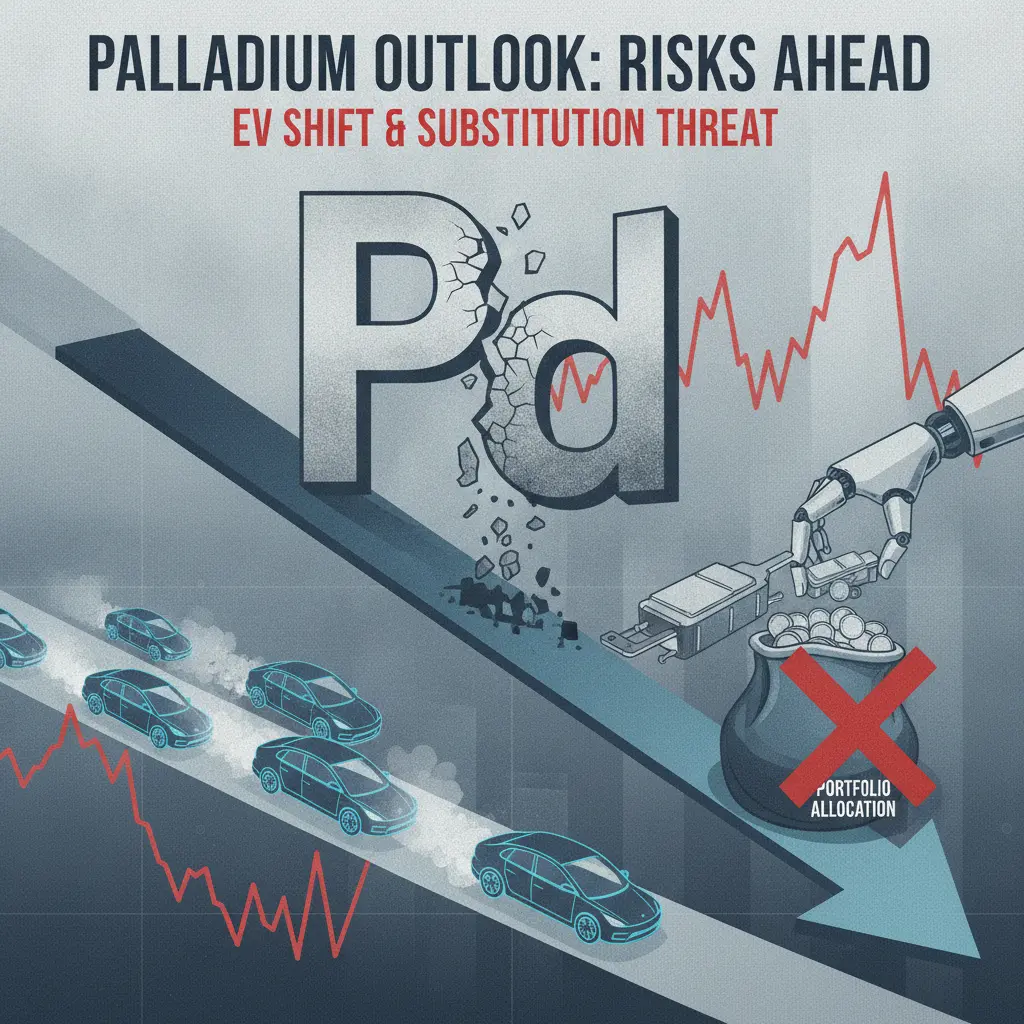
A recent analysis from Seeking Alpha highlights a significant concern: “Substantial Portfolio Allocation Is Unwarranted Given Weak Long-Term Demand.” This sentiment suggests that despite short-term fluctuations, the fundamental drivers supporting palladium’s price could erode over an extended period.
The primary concern stems from palladium’s heavy reliance on the automotive industry, particularly in catalytic converters for gasoline-powered vehicles. As the global automotive landscape rapidly shifts towards electric vehicles (EVs), which do not require catalytic converters, the long-term demand for palladium is expected to decline. Furthermore, advancements in thrifting technology and the potential for increased substitution with platinum in catalytic converters could further dampen demand.
For investors considering palladium as part of a diversified portfolio, this outlook warrants careful consideration. While precious metals like palladium traditionally offer a hedge against inflation and economic uncertainty, the specific industrial demand profile of palladium introduces a unique layer of risk. The question for many becomes: can its traditional safe-haven appeal offset the projected decline in its largest industrial application?
As the market grapples with these long-term structural changes, keeping abreast of real-time data and expert analysis becomes crucial for informed decision-making. For the latest movements and to track its performance, view the live Palladium price on Talupa.
In conclusion, while palladium’s current market stability might offer a degree of comfort, the underlying long-term demand forecasts suggest that a substantial allocation may carry increasing risk. Investors are advised to weigh these evolving market dynamics carefully against their investment objectives. Read More
Leave a Reply
You must be logged in to post a comment.