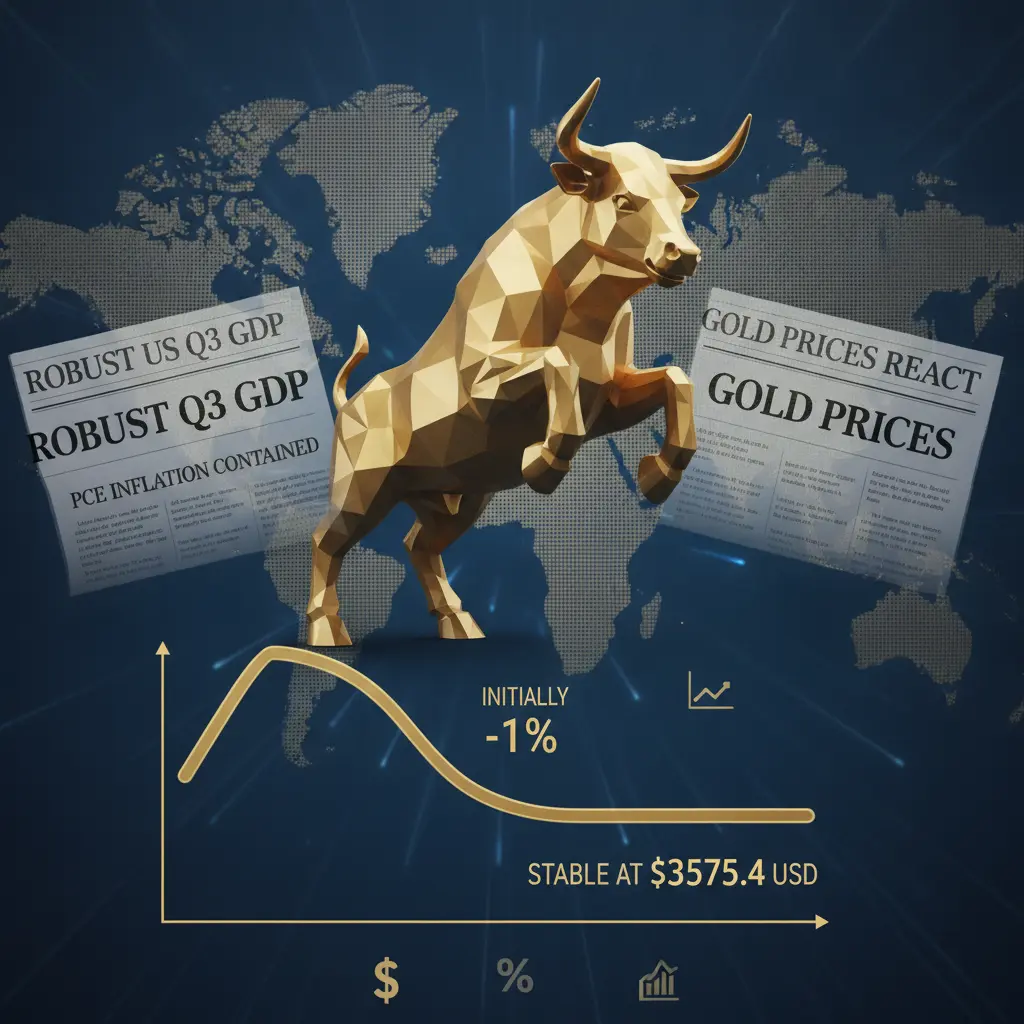
Gold markets experienced a noteworthy downturn, initially dropping 1%, as the United States’ Q3 GDP was revised upwards to a robust 4.3%. This stronger-than-expected economic growth, coupled with contained Personal Consumption Expenditures (PCE) inflation, sent ripples through the precious metals sector. The data, reported by Kitco, signals a resilient U.S. economy, often diminishing the appeal of safe-haven assets like gold.
While the market reacted to the positive economic news, the immediate impact on the live Gold price appears to have stabilized. Currently, gold is trading at $3575.4 USD per troy ounce. Over the last 24 hours, the price has remained remarkably stable, showing a 0% change, equating to a $0 fluctuation. This stability suggests that while the initial reaction to the economic data was a sell-off, the market may be reassessing its position or finding a new equilibrium.
For investors, a strong GDP and controlled inflation typically indicate that central banks might have less impetus to implement aggressive monetary easing policies, which are generally bullish for gold. When inflation is contained, gold’s role as an inflation hedge becomes less critical. Conversely, a booming economy can draw investors towards higher-yielding equities and other growth assets, reducing demand for non-yield-bearing assets like gold.
The revised GDP figures paint a picture of economic strength, potentially easing concerns about a significant economic slowdown. This economic optimism often translates to reduced uncertainty, which traditionally benefits risk assets over safe havens. Despite the initial 1% decline, gold’s current steadfast position at $3575.4 per troy ounce indicates a market grappling with short-term economic signals against its long-term intrinsic value as a store of wealth.
Going forward, market participants will closely watch subsequent economic indicators and Federal Reserve commentary to gauge the sustainability of this economic strength and its implications for monetary policy, both of which will continue to influence gold’s trajectory. Read More
Leave a Reply
You must be logged in to post a comment.