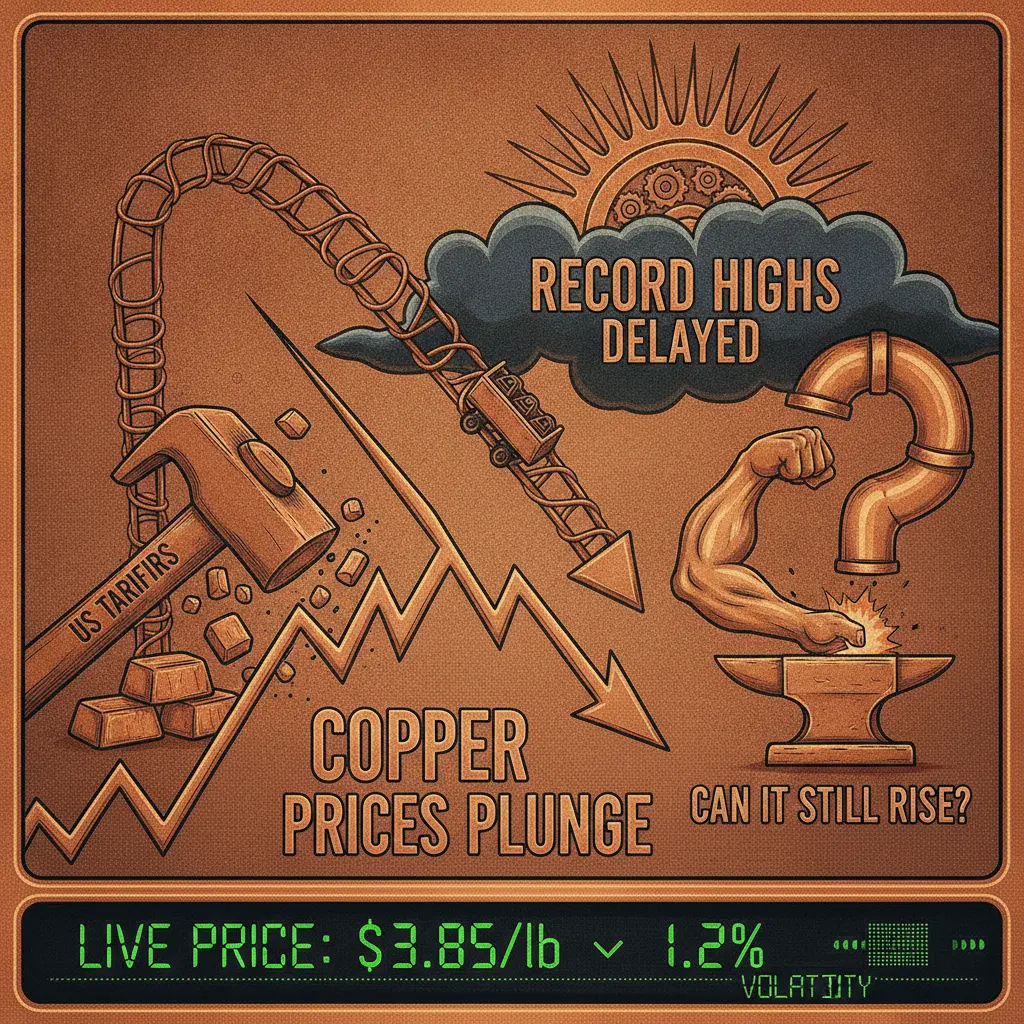
Copper markets are currently navigating a turbulent period, grappling with significant price swings that have left investors questioning its future trajectory. Following a remarkable surge to record highs, the industrial metal recently experienced a notable plunge. This sharp correction appears to be largely influenced by news indicating a potential delay in the imposition of US refined copper tariffs. The market’s reaction highlights the sensitivity of commodities to policy shifts and trade considerations.
The prospect of delayed tariffs reduces immediate trade friction, potentially easing supply concerns and tempering speculative buying that might have anticipated tighter markets. While the long-term fundamentals for copper remain robust, driven by global electrification, renewable energy infrastructure, and general industrial demand, short-term sentiment is undeniably impacted by such governmental decisions.
As market participants digest these developments, the live Copper price currently stands at $0.44 USD per troy ounce. Notably, the price has remained stable over the last 24 hours, showing a 0% change, equating to $0. This stability comes after the previous dramatic movements, suggesting a period of re-evaluation among traders.
The question on everyone’s mind is: can copper prices still rise? Analysts suggest that while the immediate upward momentum may be curtailed by the tariff delay, the underlying demand narrative for copper remains strong. The metal is indispensable for the green energy transition, from electric vehicles to wind turbines and solar panels. Any sustained economic recovery globally, particularly in major industrial economies, would naturally bolster demand. Furthermore, supply-side constraints, including dwindling ore grades and the significant capital expenditure required for new mines, could also provide long-term price support.
Investors will be closely watching for further updates on trade policy, global economic indicators, and the health of key industrial sectors to gauge the next significant move for the red metal. The current stability might be a temporary calm before the market decides its next direction, making close monitoring essential for anyone invested in this critical commodity. Read More
Leave a Reply
You must be logged in to post a comment.