Palladium, a lesser-known but equally significant member of the precious metals family, frequently exhibits market behavior distinctly different from its bullion counterparts like gold, silver, and even platinum. Unlike gold, which is often viewed as a safe-haven asset and a store of value, Palladium’s price movements are predominantly dictated by industrial demand, particularly from the automotive sector.
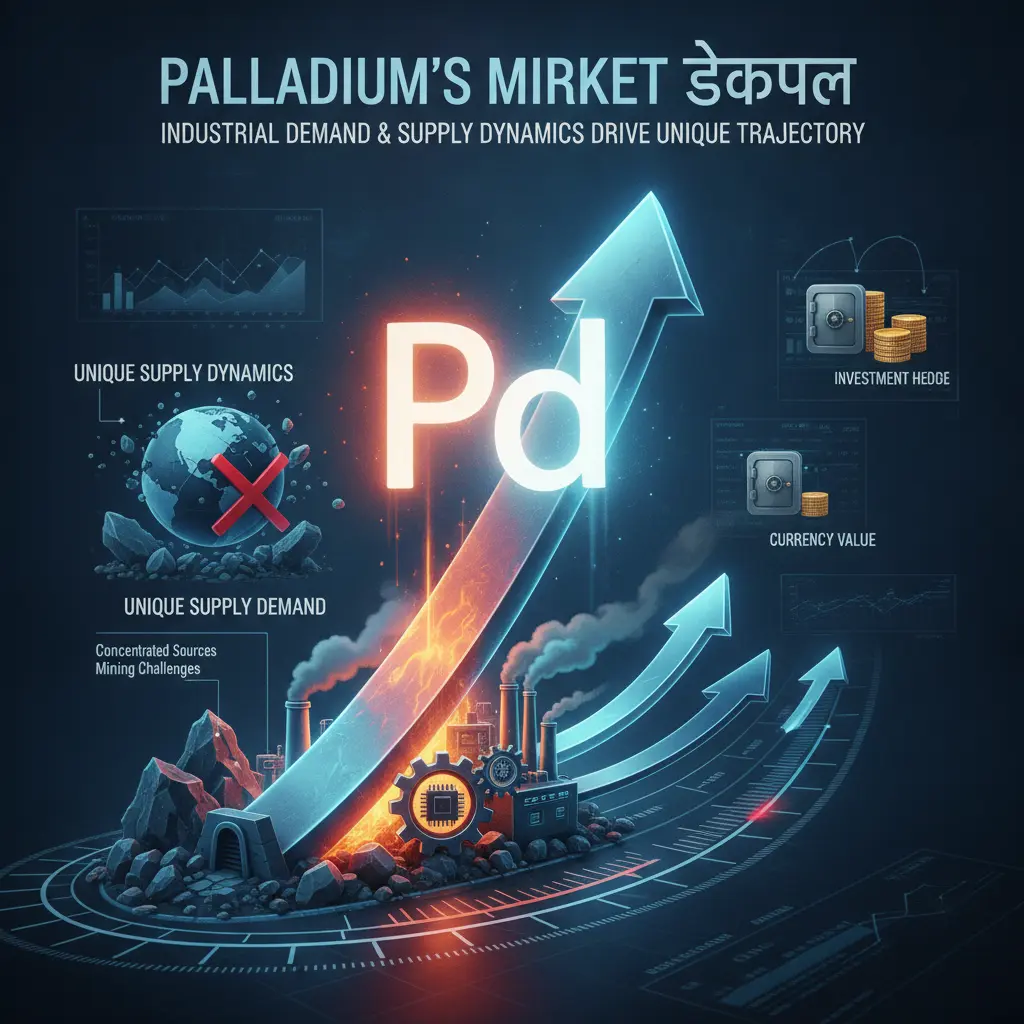
The primary driver for Palladium’s market is its critical role in catalytic converters for gasoline-powered vehicles. This industrial reliance means its price is exceptionally sensitive to global economic health, automotive production trends, and environmental regulations pushing for cleaner emissions. While gold and silver might react strongly to inflation fears or geopolitical instability as investment havens, Palladium’s fortunes are more tethered to manufacturing output and technological advancements in emission control. This fundamental difference in demand structure—industrial consumption versus investment and jewelry—sets Palladium apart.
Furthermore, Palladium’s supply chain adds another layer of uniqueness. It is primarily mined as a byproduct of nickel and platinum extraction, making its supply relatively inelastic to price changes. Major producers like Russia and South Africa also introduce geopolitical risks and potential supply disruptions that can significantly impact its market. This combination of concentrated supply and crucial industrial demand creates a volatile market that can swing dramatically based on specific economic or supply-side events, rather than broad market sentiment.
Currently, the market reflects a degree of stability, with the live Palladium price holding at $1264 USD per troy ounce. It has seen a relatively quiet 24 hours, with a 0% change, indicating a period of equilibrium amidst its typically dynamic trading patterns. This steadiness, however, belies the underlying forces that make Palladium a fascinating and often unpredictable asset, trading on a unique set of fundamentals that distinguish it clearly from the more traditional bullion metals. Read More
Leave a Reply
You must be logged in to post a comment.