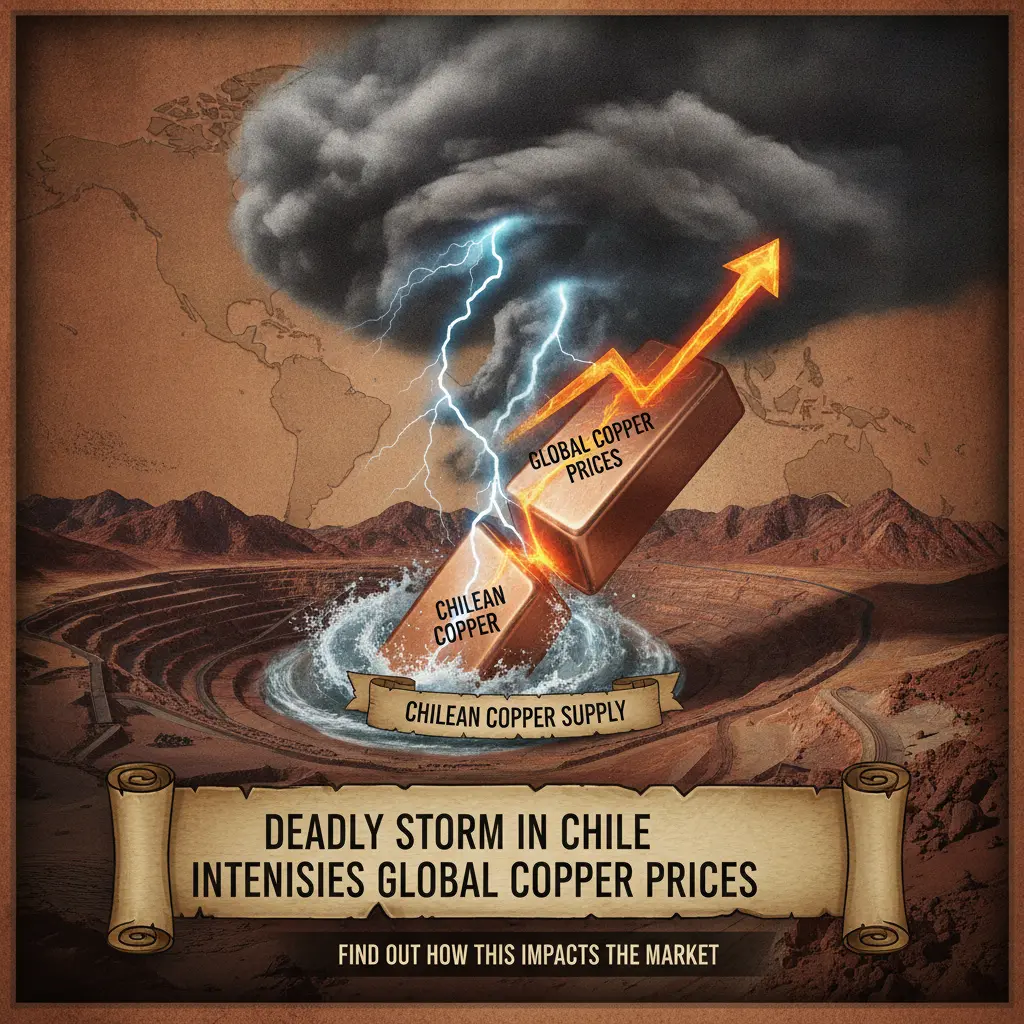
A deadly storm sweeping across Chile, the world’s largest copper producer, is significantly intensifying pressure on global copper prices. The severe weather event threatens to disrupt vital mining operations and supply chains, casting a shadow of uncertainty over future output from the South American nation.
Chile’s vast Atacama Desert region, home to some of the planet’s largest copper mines, is particularly vulnerable to extreme weather. Heavy rainfall, flash floods, and landslides can lead to temporary mine closures, hinder transportation of ore and refined metal to ports, and even damage critical infrastructure. Such disruptions can have ripple effects across the global industrial landscape, given copper’s essential role in everything from construction and electronics to renewable energy technologies.
While the long-term implications of this storm are yet to fully unfold, market analysts are closely watching for any signs of supply constriction. Despite this mounting pressure, the immediate impact on global trading has not been starkly reflected in the past 24 hours. The current live Copper price stands at $0.44 USD per troy ounce. This figure shows a 0% change over the last 24 hours, with no discernible price movement ($0) during that period.
This apparent stability amidst looming supply concerns highlights the complex interplay of market forces. While the physical disruption in Chile suggests upward price pressure, other factors such as global demand outlooks or existing inventory levels might be cushioning immediate volatility. Investors and industrial consumers, however, remain vigilant. Any prolonged disruption to Chilean production could quickly shift sentiment and trigger price adjustments in the coming days and weeks. The “red metal” market is inherently sensitive to supply shocks, and the deadly storm in Chile serves as a potent reminder of the geopolitical and environmental factors that underpin commodity values. The coming weeks will be crucial for assessing the true extent of the storm’s impact on copper supply. Read More
Leave a Reply
You must be logged in to post a comment.