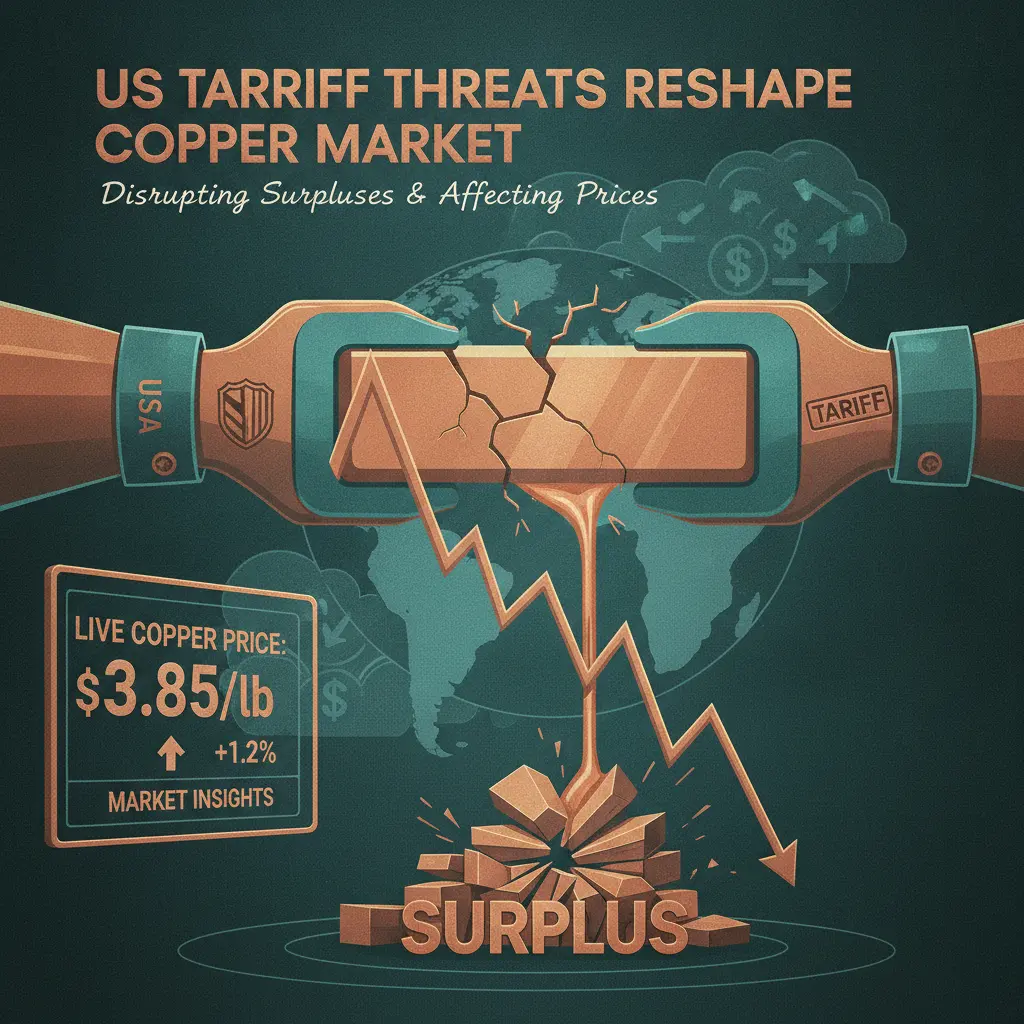
The global copper market has been jolted by recent geopolitical developments, as a US tariff threat has reportedly upended a previously anticipated surplus, driving prices to test unprecedented highs. This significant shift, highlighted by a Reuters report, underscores the inherent volatility and sensitivity of the commodities sector to international trade policies.
For months, analysts had projected a looming surplus in copper supply, driven by increased production and moderating demand in certain sectors. However, the prospect of new tariffs from the United States has introduced a powerful disruptive force, fundamentally altering market expectations. Such tariffs could lead to supply chain reconfigurations, increased costs for importers, and ultimately, a tightening of global supply relative to demand as trade flows are redirected or curtailed.
The immediate reaction in the market saw prices surging, challenging historical peaks as traders reacted to the potential for constrained supply and increased demand from regions unaffected by the tariffs, or as companies stockpiled ahead of their implementation. This speculative fervor reflects the deep uncertainty tariffs inject into the delicate balance of commodity markets.
However, as of today, the market presents a more stable picture in terms of immediate fluctuations. The live Copper price currently stands at $0.46 USD per troy ounce. Over the last 24 hours, the price has seen a flat performance, registering 0% change, indicating a period of stabilization following the initial impact of the tariff discussions.
This calm doesn’t diminish the underlying tension. The longer-term trajectory of copper prices remains tethered to the evolving trade landscape, the resolution of tariff threats, and the ongoing balance between industrial demand and global supply. Stakeholders across industries, from construction to electronics, are closely monitoring these developments, understanding that copper’s role as a critical industrial metal makes its price fluctuations a key economic indicator. Read More
Leave a Reply
You must be logged in to post a comment.