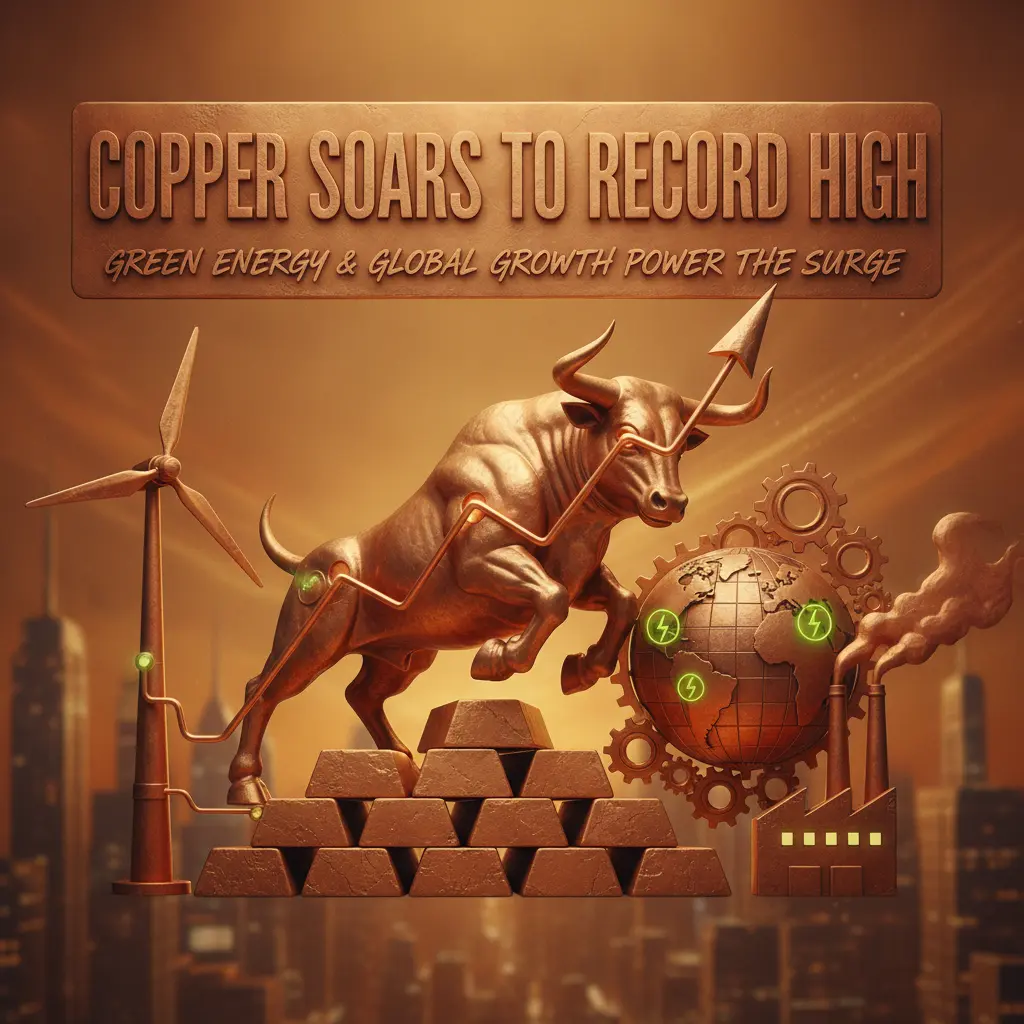
Copper, often dubbed ‘Dr. Copper’ for its uncanny ability to forecast economic health, has indeed notched a new record high, signaling robust demand and a shifting global economic landscape. This monumental achievement, reported on Tuesday, June 2, 2026, underscores the metal’s pivotal role in the ongoing worldwide energy transition and broader industrial expansion.
The surge in copper prices is largely fueled by a confluence of factors. The aggressive global push towards decarbonization and green energy initiatives has dramatically increased demand for the red metal. Electric vehicles, charging infrastructure, wind turbines, solar panels, and smart grids all rely heavily on copper due to its exceptional conductivity. Furthermore, an overall resurgence in manufacturing and construction activities across major economies post-pandemic has provided significant tailwinds.
Supply-side constraints are also contributing to the upward pressure. New mine projects face increasing hurdles, including environmental regulations, declining ore grades, and lengthy development times. Existing operations are also grappling with various challenges that limit output, creating a tighter market balance against escalating demand.
Investors and analysts are closely watching copper’s trajectory, viewing its sustained strength as a positive indicator for future economic growth. Its essential nature in virtually every sector, from consumer electronics to heavy industry, makes its price movements a critical barometer. As the world continues its journey towards electrification and sustainable infrastructure, copper’s strategic importance is only set to intensify.
For the very latest market data and detailed historical performance, you can track the live Copper price on Talupa.com. This record high not only reflects current market dynamics but also paints a compelling picture of future industrial needs, solidifying copper’s status as a critical commodity in the 21st century economy. Read More
Leave a Reply
You must be logged in to post a comment.