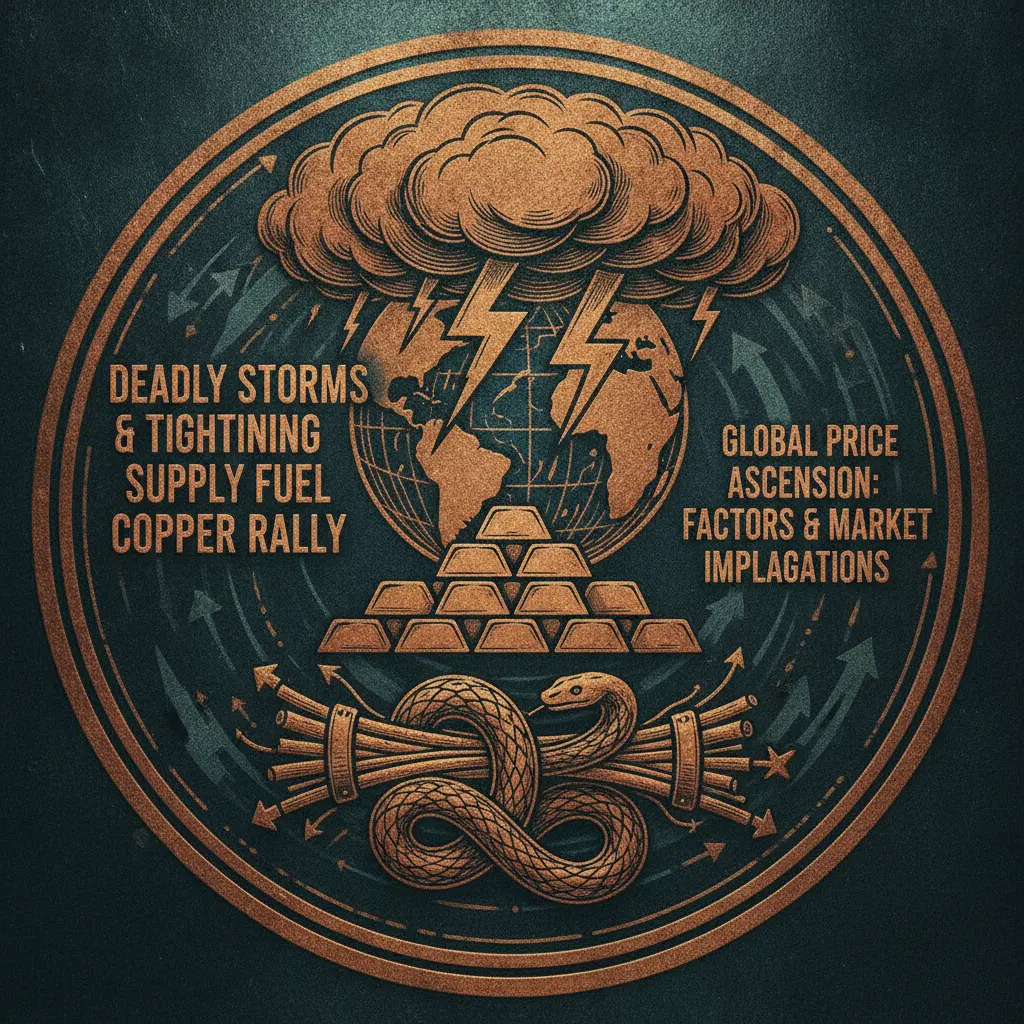
The vital industrial metal, copper, continues to command significant attention in global markets, propelled by a confluence of disruptive forces. While the broader narrative points to a substantial ascent, with deadly storms and persistent global supply squeezes creating upward pressure, the market currently exhibits a period of stability. Today, investors watching the live Copper price on Talupa.com will observe it holding steady at $0.44 USD per troy ounce, showing a 0% change over the last 24 hours. This momentary calm, however, belies the potent underlying factors that have been sending the red metal’s value soaring in recent times.
Recent severe weather events across key mining regions have emerged as a primary catalyst for this upward trend. From South America to Africa, deadly storms have wreaked havoc on mining operations, causing widespread disruptions to production schedules and transportation networks. Infrastructure damage, power outages, and labor challenges stemming from these natural disasters directly impede the extraction and delivery of copper, shrinking the available supply at a critical juncture.
Compounding the issue is a persistent global supply squeeze. Demand for copper remains robust, driven by the accelerating global transition towards green energy, electric vehicles, and massive infrastructure projects. Copper is an indispensable component in everything from solar panels and wind turbines to EV batteries and charging stations. Simultaneously, new mine discoveries are becoming scarcer, and existing deposits are facing declining ore grades, making extraction more costly and challenging. Geopolitical tensions and evolving environmental regulations also add layers of complexity to securing a consistent and ample supply.
The combined effect of these factors creates a challenging environment for industries heavily reliant on copper, including construction, electronics, and automotive manufacturing. Higher copper prices translate to increased input costs, potentially impacting consumer prices and project viability. As the world continues its push for decarbonization and urbanization, the demand for this essential commodity is only expected to grow, suggesting that the fundamental pressures driving its value higher are unlikely to abate soon. The current stability may just be a brief pause in what remains a highly volatile and upward-trending market for the red metal. Read More
Leave a Reply
You must be logged in to post a comment.