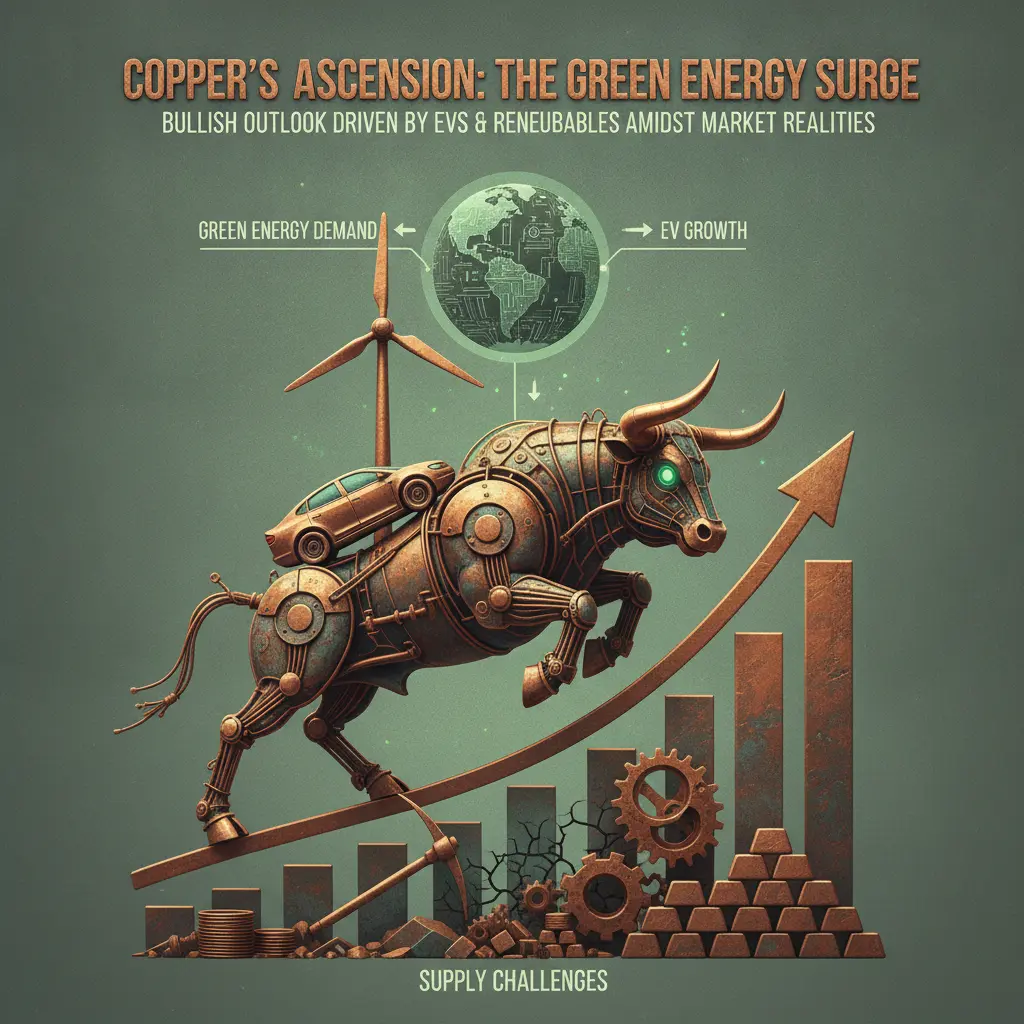
The red metal, Copper, has been enjoying significant attention in financial markets, with a prevailing sentiment suggesting a robust bullish trajectory. As observed by International Banker, the question facing investors and industry leaders is how realistic this optimistic outlook truly is. Copper, often dubbed “Dr. Copper” for its ability to predict economic health, stands at a pivotal juncture, driven by a confluence of global trends. A primary catalyst for Copper’s anticipated demand surge is the accelerating global energy transition. The push towards decarbonization, spearheaded by renewable energy infrastructure projects like solar farms and wind turbines, alongside the exponential growth in electric vehicles (EVs), fundamentally underpins the need for vast quantities of Copper. Its superior electrical conductivity and ductility make it indispensable for wiring, batteries, and charging infrastructure. Furthermore, ongoing urbanization and infrastructure development in emerging economies continue to fuel demand for this essential industrial metal. However, the path ahead is not without its complexities. While demand projections are strong, potential supply challenges loom. Disruptions from geopolitical events, labor disputes in major mining regions, and the lengthy lead times for new mine development could constrain supply, pushing prices higher. Conversely, a significant global economic slowdown or a slowdown in the green energy transition could temper demand expectations, introducing volatility. Market participants must carefully weigh these factors when assessing Copper’s trajectory. For those tracking its movements, the live Copper price on Talupa provides critical real-time insights. Ultimately, while the fundamental drivers for a bullish Copper market appear compelling in the long term, short-term fluctuations and macroeconomic headwinds cannot be ignored. The “realistic” aspect of its bullish outlook depends on a delicate balance between sustained demand growth from technological shifts and the ability of global supply to keep pace without significant disruption. Read More
Leave a Reply
You must be logged in to post a comment.