
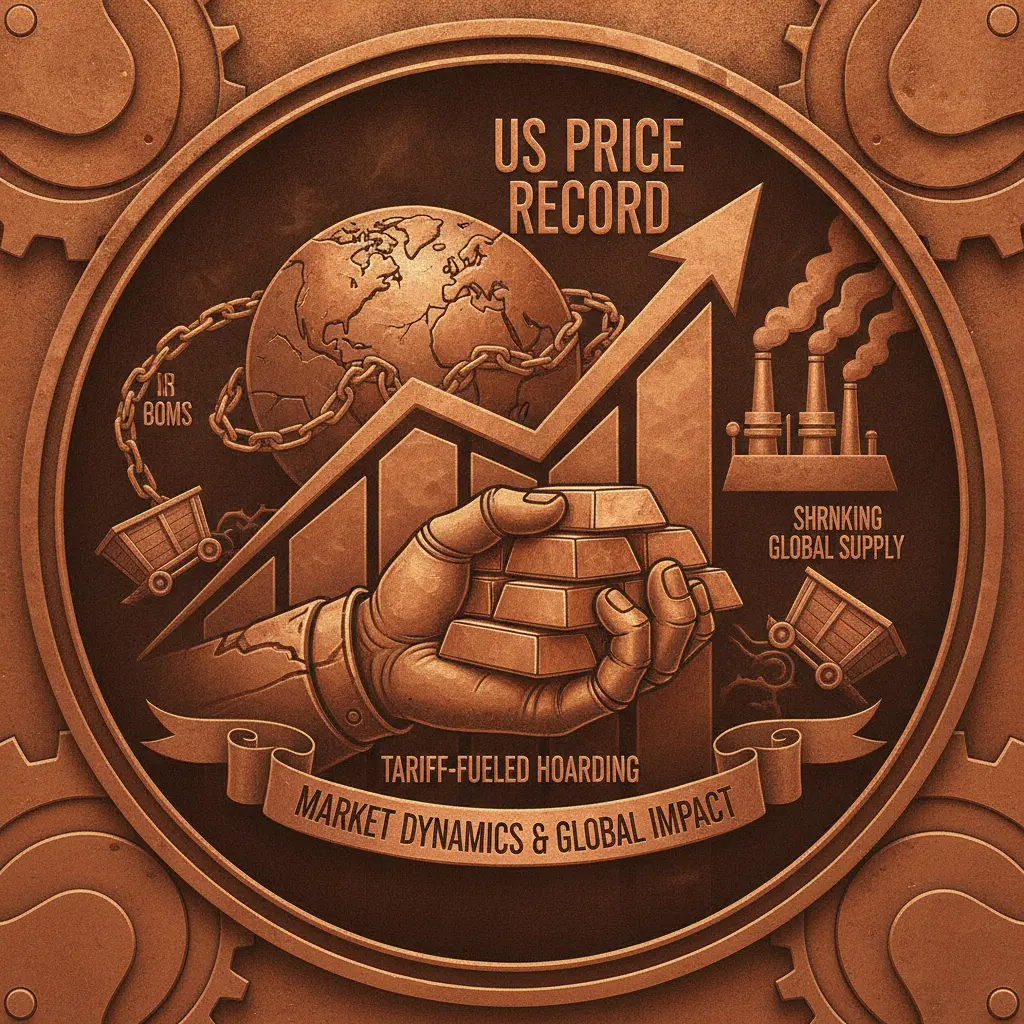
Copper, often dubbed ‘Dr. Copper’ for its predictive economic prowess, recently made headlines by setting a fresh US record price. This historic surge, first reported on August 5, 2026, is largely attributed to a confluence of aggressive tariff-driven hoarding and an increasingly constrained global supply, creating a robust, albeit volatile, market environment for the essential industrial metal.
The imposition of tariffs has created a significant incentive for domestic accumulation, with companies and investors stocking up on copper to mitigate future costs and secure supply chains. This strategic hoarding, while rational for individual entities, contributes to a tightening market by removing available material from circulation. Simultaneously, the global supply landscape for copper faces mounting pressures. Production disruptions, rising operational costs, and delays in new mining projects across key producing regions are collectively shrinking the available pool of the red metal. This supply-demand imbalance is a powerful catalyst, pushing prices upwards and highlighting copper’s critical role in the global economy.
Copper is indispensable for a vast array of industries, from construction and automotive to electronics and renewable energy infrastructure. Its electrical conductivity and corrosion resistance make it vital for wiring, pipes, and countless technological applications. The sustained high price environment could have significant ripple effects, impacting manufacturing costs and potentially delaying projects that rely heavily on the metal.
Investors and market watchers closely monitor copper’s movements. Currently, the live Copper price stands at $0.45 USD per troy ounce. Over the last 24 hours, the price has remained stable, showing a 0% change, equating to no movement in its dollar value. While today’s immediate movements are flat, the underlying dynamics of tariffs and supply constraints continue to shape its long-term trajectory.
The trajectory of copper prices remains a key indicator for global economic health. As nations worldwide push towards electrification and sustainable infrastructure, demand for copper is projected to remain strong, setting the stage for continued scrutiny of its market performance amid ongoing supply and trade policy challenges. Read More
Leave a Reply
You must be logged in to post a comment.