
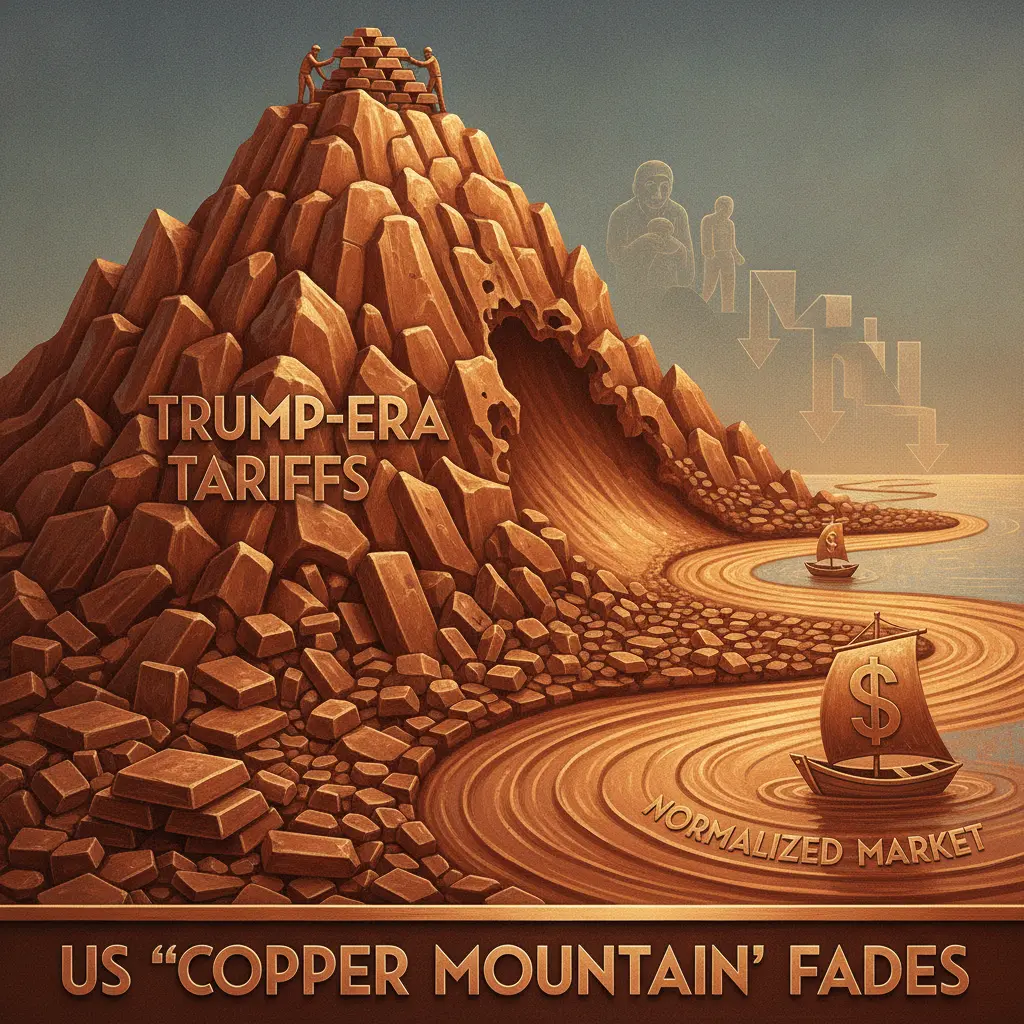
A “copper mountain,” born out of the strategic stockpiling in the United States in anticipation of former President Trump’s tariff threats, is now seeing its once-dominant effects begin to wane. This substantial accumulation, a direct consequence of a proactive business response to potential protectionist trade policies, significantly altered domestic copper supply dynamics for an extended period.During the height of tariff concerns, importers and manufacturers across the US moved to secure vast quantities of copper. This strategic build-up was a calculated effort to insulate businesses from anticipated increased import costs and potential supply chain disruptions. By creating an unusually high level of inventory, companies aimed to mitigate future economic shocks. For a considerable time, this tariff-driven, artificial demand distorted the natural flow of copper, effectively transforming the US into a major storage hub for the vital industrial metal, well beyond typical operational needs.However, as the geopolitical landscape has evolved and initial trade tensions have either softened or been recontextualized, the primary rationale behind this extensive stockpiling has gradually diminished. The imposing “copper mountain” is now being steadily drawn down, reflecting a normalization of global supply chains and a recalibration of market sentiment. Factors such as a renewed emphasis on more efficient, just-in-time inventory management, coupled with a more predictable international trade environment, are collectively contributing to the gradual erosion of this tariff-induced copper hoard. Investors and market watchers are now closely monitoring the live Copper price as these fundamental market forces reassert their influence.The diminishing impact of Trump’s tariff threats on US copper inventories signals a market that is returning to more traditional supply and demand drivers. While the “copper mountain” undeniably served its intended purpose during a period of considerable uncertainty and geopolitical friction, its slow dissipation marks a significant adjustment for the market. This ongoing transition will be critical for stakeholders in understanding future price movements and the overall health and direction of the global industrial metal sector. Read More
Leave a Reply
You must be logged in to post a comment.