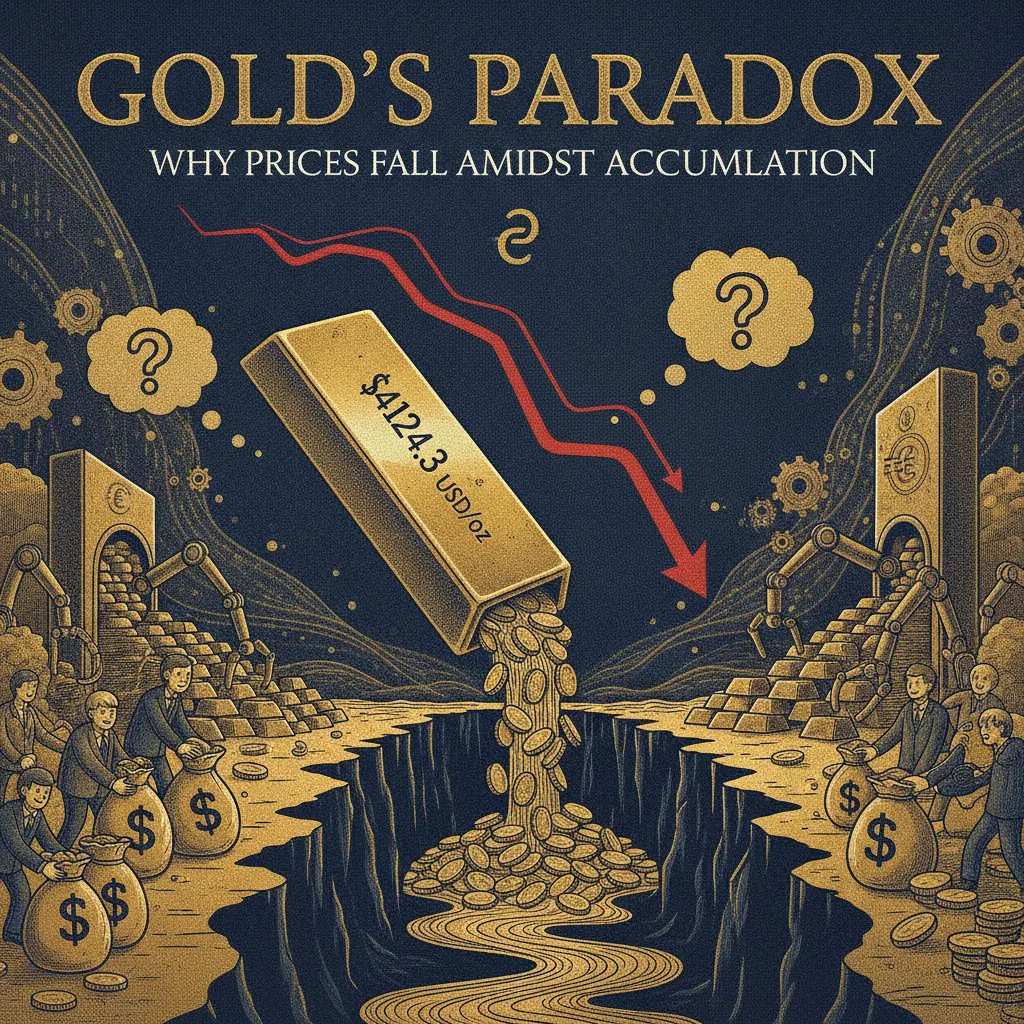
The precious metals market often presents fascinating paradoxes, and gold is currently at the heart of one such intriguing scenario. Despite robust interest from both institutional investors and central banks, the price of gold has been observed to be declining. This phenomenon begs the question, as highlighted by Morningstar, “Why Is the Gold Price Falling Even as Investors and Central Banks Pile In?”
This perplexing trend unfolds against a backdrop where the live Gold price currently stands at $4124.3 USD per troy ounce. Over the past 24 hours, the metal has shown stability, with a 0% change, equating to a $0 movement. While this specific data point reflects a moment of equilibrium, the broader trend, as observed by analysts, points to a general softening despite strong underlying demand drivers.
Several factors could be contributing to this market disconnect. Historically, a stronger U.S. dollar can exert downward pressure on gold prices, as it makes the dollar-denominated asset more expensive for international buyers. Similarly, shifts in real interest rates or the broader sentiment in equity markets can influence gold’s appeal as a safe-haven asset or an inflation hedge. It’s plausible that short-term profit-taking or reallocation of capital within certain investment segments could be counteracting the significant purchases made by long-term holders and national reserves.
Central banks, in particular, have been consistent buyers of gold, often viewing it as a strategic asset for reserve diversification and a hedge against geopolitical and economic uncertainties. This steady accumulation, coupled with sustained interest from various investor classes seeking portfolio stability, typically suggests upward price momentum. The current situation, however, suggests that other powerful market forces are at play, momentarily overshadowing this fundamental demand.
For market watchers on Talupa, the current environment underscores the complex interplay of macroeconomic indicators, market sentiment, and supply-demand dynamics. While the short-term price action might appear counterintuitive, the continued accumulation by major players signals enduring confidence in gold’s long-term value proposition. Understanding these nuanced movements is key to navigating the evolving landscape of precious metals. Read More
Leave a Reply
You must be logged in to post a comment.