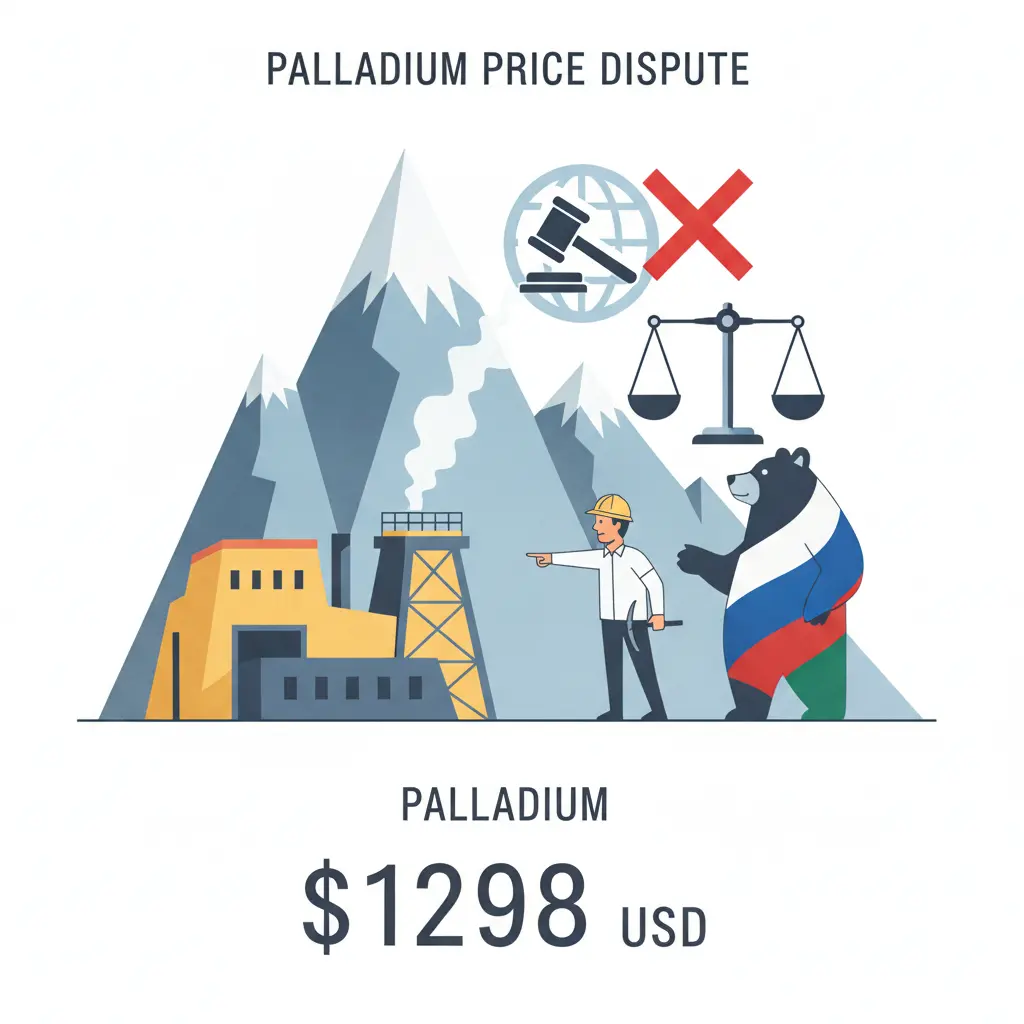
A legal and economic standoff is brewing in the precious metals market, with a prominent Montana palladium mine publicly attributing recent price downturns to Russian market manipulation. This assertion, however, has been met with disagreement from an international court, adding complexity to the global palladium narrative.
The Montana operation, a significant player in the North American palladium sector, claims that strategic actions by Russian producers have intentionally driven down market prices, impacting their profitability and operational stability. Russia is a major global producer of palladium, and its influence on supply dynamics is undeniable. The mine’s allegations suggest an unfair competitive environment, where geopolitical maneuvering allegedly supersedes free-market principles.
However, an international tribunal reviewing the dispute has reportedly sided against the Montana mine’s claims, indicating that the price fluctuations observed do not provide sufficient evidence of direct, malicious manipulation by Russian entities. This ruling suggests that other market forces, such as shifts in industrial demand, technological advancements, or broader macroeconomic trends, may be more significant drivers of palladium’s valuation.
The current market reflects a period of relative calm amidst these historical accusations. Today, the live Palladium price stands at $1298 USD per troy ounce. Notably, the precious metal has shown stability over the last 24 hours, with no change in price ($0).
This legal battle underscores the intricate and often politically charged nature of global commodity markets. While individual producers seek to protect their interests, the broader market typically responds to a confluence of supply-demand dynamics, economic indicators, and, at times, external influences that may or may not be deemed manipulative by international bodies. The palladium market continues to be a space to watch, balancing industrial demand with geopolitical currents. Read More
Leave a Reply
You must be logged in to post a comment.