Palladium, often overshadowed by its flashier counterparts Gold and Silver, continues to carve out a significant niche in the precious metals market. As investors and industry observers look ahead to 2026, recent forecasts from reputable sources like BullionVault highlight the ongoing analysis of precious metal prices, including Gold, Silver, Platinum, and Palladium. These forward-looking perspectives provide a crucial backdrop for understanding the potential trajectory of this vital industrial metal.
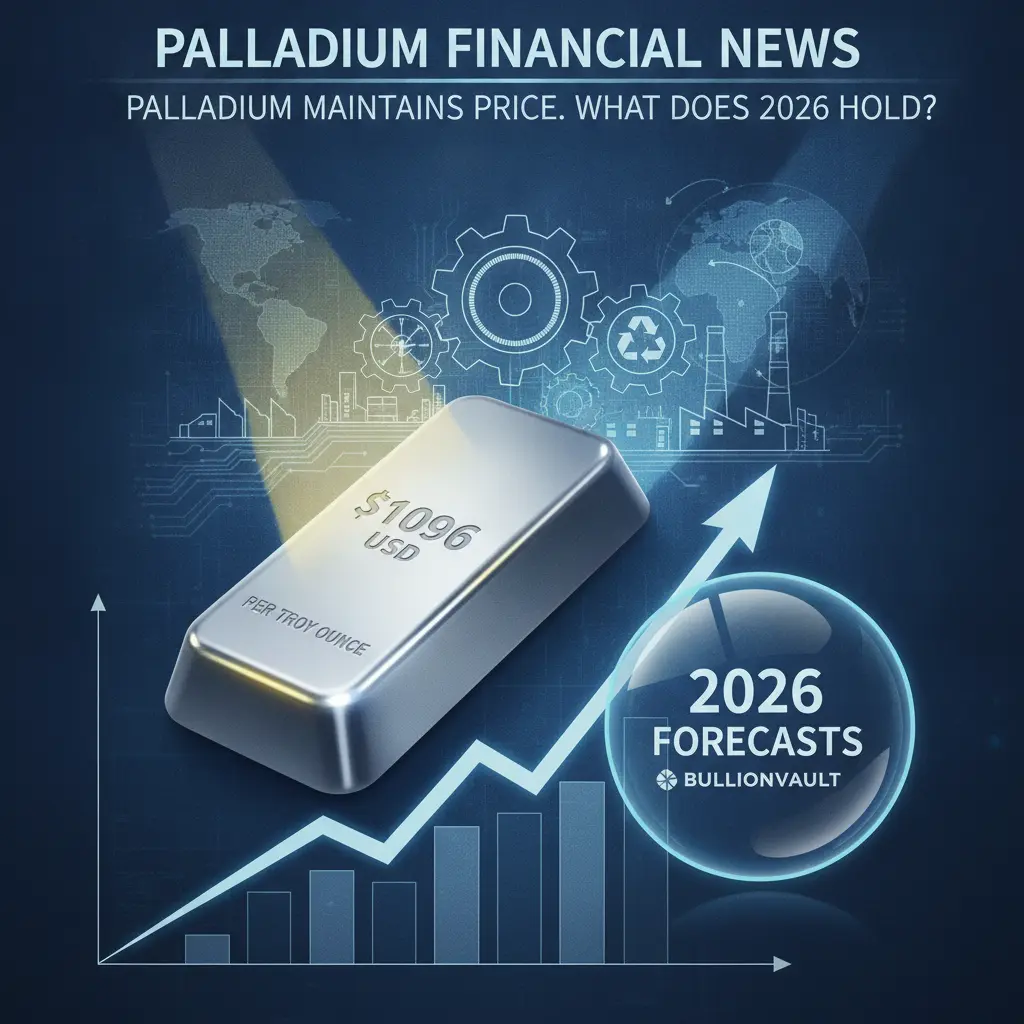
Currently, the live Palladium price stands at an interesting juncture, holding firm at $1096 USD per troy ounce. Notably, the past 24 hours have seen a remarkable stability, with the price showing no change, remaining exactly where it started. This 0% movement, representing a $0 shift, indicates a period of consolidation for the metal. Such stability can be indicative of a market digesting recent events or awaiting new fundamental drivers.
Palladium’s primary demand stems from the automotive industry, particularly in catalytic converters designed to reduce harmful emissions. As global environmental regulations tighten and the transition to electric vehicles continues to evolve, the demand dynamics for Palladium are under constant scrutiny. While the long-term outlook for internal combustion engines faces headwinds, the immediate and medium-term demand for Palladium in hybrid vehicles and ongoing conventional car production remains robust.
The 2026 forecasts for precious metals, as summarized by BullionVault, underscore the complex interplay of economic factors, industrial demand, and speculative interest that influence these commodities. For Palladium, its unique supply-demand balance, often impacted by geopolitical events affecting major producers like Russia and South Africa, will be a key determinant of its future value. While specific price points for 2026 are subject to a multitude of variables, the current steady price suggests a market that is evaluating its industrial foundations against broader macroeconomic trends. Investors continue to monitor these developments closely, understanding that even stable periods can precede significant shifts. Read More
Leave a Reply
You must be logged in to post a comment.