
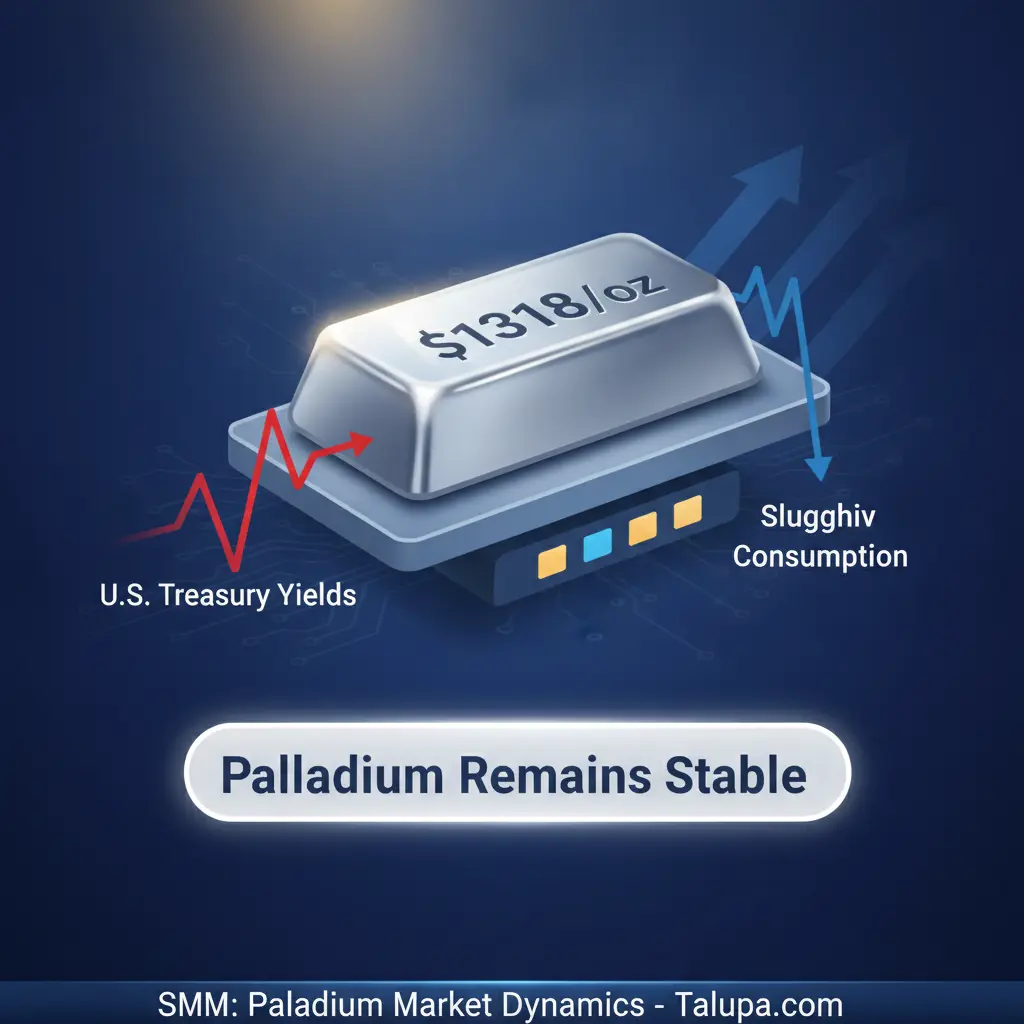
Palladium, a vital precious metal primarily utilized in catalytic converters, finds itself navigating a complex market landscape influenced by macroeconomic factors and subdued industrial demand. A recent review from Shanghai Metals Market (SMM) highlights how fluctuating U.S. Treasury yields are impacting broader precious metals trends, while spot consumption for both platinum and palladium remains notably sluggish.
The relationship between U.S. Treasury yields and non-yielding assets like palladium is well-established. As bond yields rise, they offer investors a more attractive return on their capital, potentially drawing investment away from commodities that do not provide interest or dividends. This dynamic can exert downward pressure on precious metal prices, even for industrial metals like palladium. Despite these broader headwinds, the live Palladium price is currently holding at $1318 USD per troy ounce, showing a remarkable stability of 0% change over the last 24 hours.
The SMM report’s observation of sluggish market consumption for palladium points to potential weakness in its primary demand sectors. The automotive industry, which relies heavily on palladium for emissions control devices, continues to be a crucial determinant of the metal’s demand. Any slowdown in vehicle production or a shift in technological preferences could significantly impact palladium consumption. Investors are closely monitoring global economic indicators and automotive sales figures for signs of a rebound in industrial activity.
As the market grapples with the interplay of interest rate expectations and industrial demand, palladium’s current stability at $1318 USD per troy ounce suggests a delicate balance. While the broader precious metals complex feels the squeeze from Treasury yields, and consumption remains muted, the lack of significant price movement indicates a wait-and-see approach from market participants. The future trajectory of palladium will largely depend on the evolution of global monetary policy and the recovery pace of key industrial sectors. Read More
Leave a Reply
You must be logged in to post a comment.