
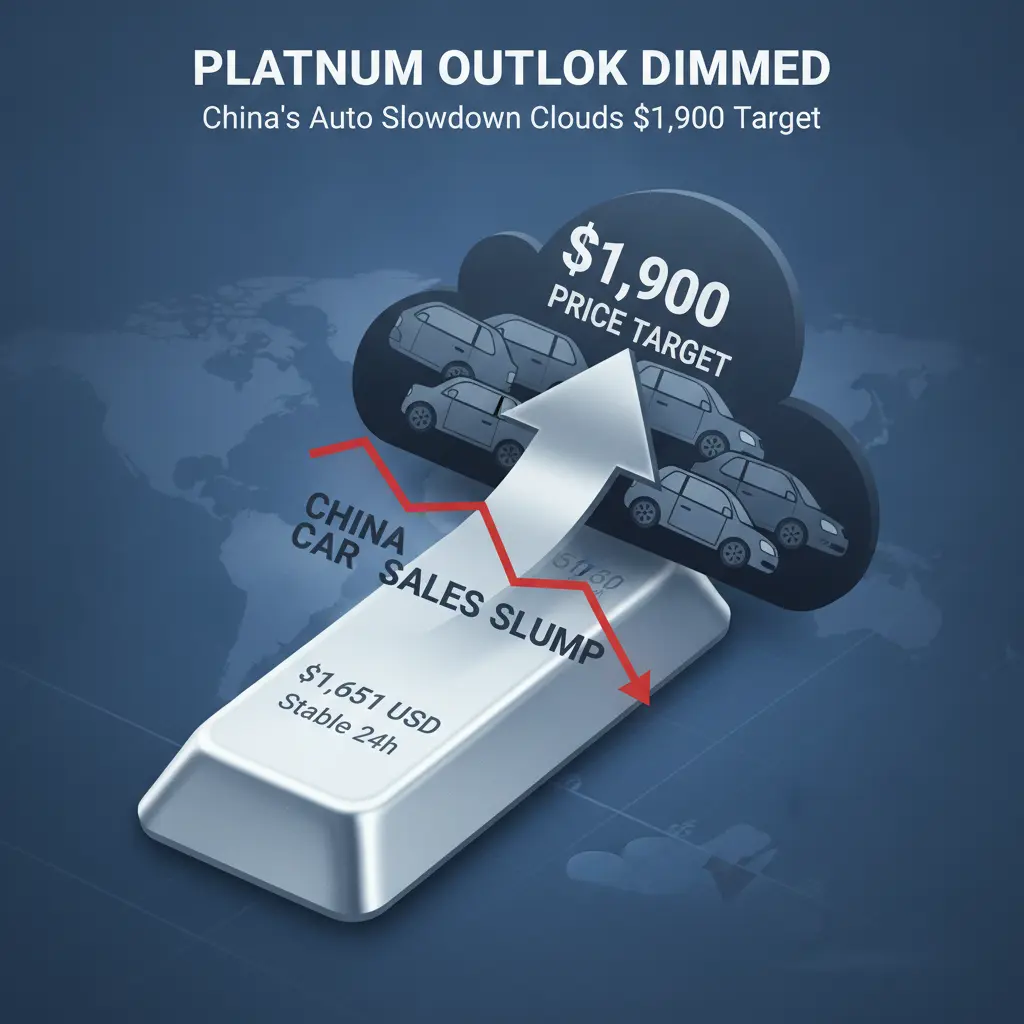
Platinum, a crucial industrial metal and investment asset, is currently trading at $1651 USD per troy ounce, reflecting a stable period with no change observed over the last 24 hours. This steadiness comes amidst growing concerns that could temper previous bullish forecasts, including the ambitious $1,900 target.
The primary cloud on platinum’s horizon, as highlighted by recent market analysis, is the significant slump in China’s car sales. China remains the world’s largest automotive market, and its demand is a pivotal driver for platinum prices, largely due to its extensive use in catalytic converters. These devices are essential for reducing emissions in gasoline-powered vehicles, making the automotive sector responsible for a substantial portion of global platinum consumption.
A slowdown in car sales directly translates to reduced demand for platinum from manufacturers. This decrease in industrial uptake can exert downward pressure on prices, making it harder for the metal to reach higher valuation targets. While platinum has enjoyed periods of strong performance, its industrial applications mean it is highly sensitive to global economic indicators, particularly those impacting manufacturing and consumer spending in major economies like China. The market is now closely watching how long this automotive downturn might persist and what broader implications it holds for industrial metals.
The aspiration for platinum to reach the $1,900 mark, once a strong possibility, now seems more challenging given these headwinds. Investors and analysts will be carefully monitoring economic data from China and global automotive production figures in the coming months. For those tracking the metal’s performance, the live Platinum price will remain a key indicator of how these supply and demand dynamics play out. While long-term fundamentals for platinum remain robust due to its diverse applications in jewelry, investment, and emerging hydrogen technologies, the short-to-medium term outlook is undeniably influenced by the current industrial demand landscape. Read More
Leave a Reply
You must be logged in to post a comment.