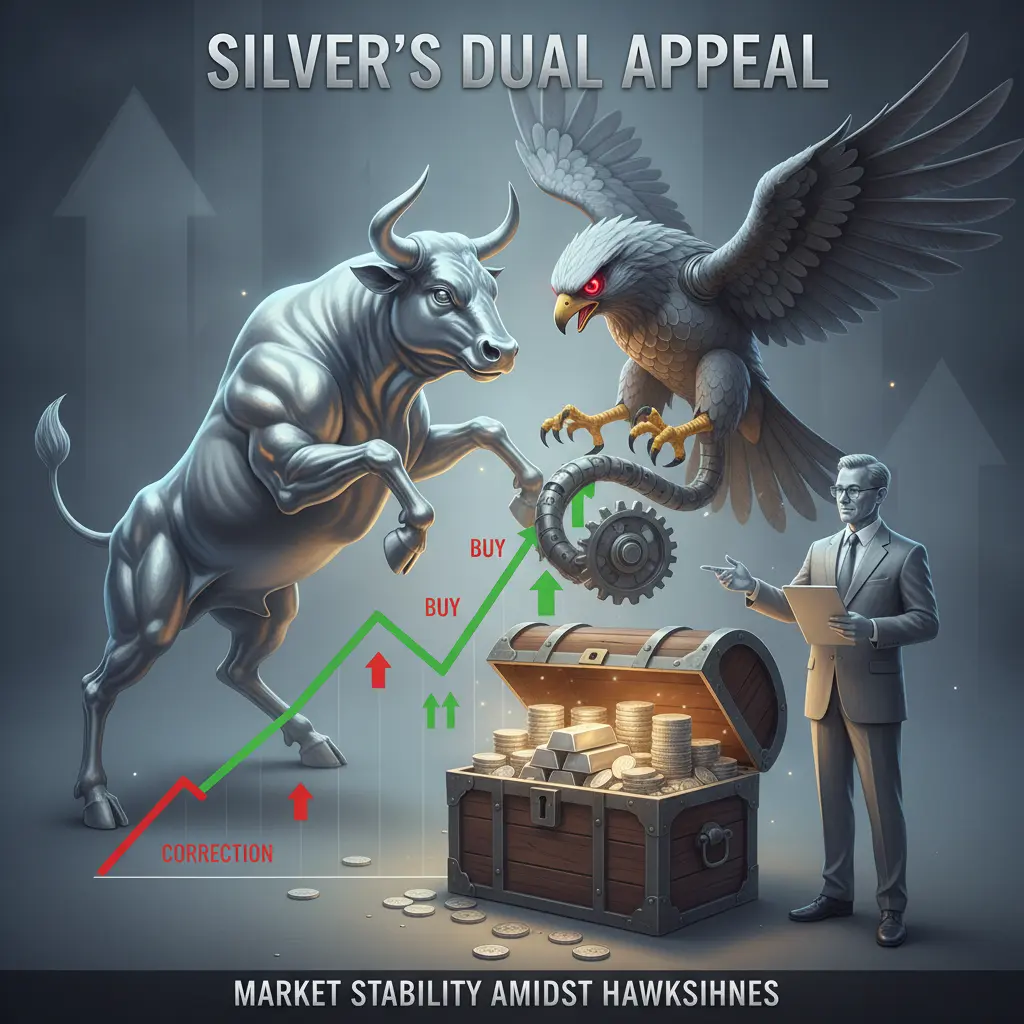
Despite the persistent shadow of a hawkish Federal Reserve, a leading analyst suggests that recent price corrections in the precious metals market, particularly for silver, could be signaling prime buying opportunities. This perspective comes as investors navigate an economic landscape shaped by inflation concerns and interest rate speculation.
Traditionally, a hawkish Fed, characterized by tighter monetary policy and higher interest rates, tends to put downward pressure on non-yielding assets like precious metals. A stronger U.S. dollar, often a byproduct of such policies, also makes dollar-denominated commodities more expensive for international buyers. However, the analyst points out that these very corrections, driven by short-term market reactions, might be creating attractive entry points for long-term investors.
Silver, often dubbed “poor man’s gold,” possesses a unique dual appeal. Beyond its role as a safe-haven asset and inflation hedge, it boasts significant industrial demand, being a crucial component in electronics, solar panels, and various emerging green technologies. This industrial underpinning provides a fundamental floor that often distinguishes silver from pure investment assets during economic shifts.
Currently, the live Silver price stands at $63.99 USD per troy ounce. Over the last 24 hours, the price has remained stable, showing a 0% change, or $0. This current stability, following earlier corrections, aligns with the analyst’s view that the market may be digesting previous movements and presenting a more tempered outlook for potential buyers.
For those considering an investment in silver, understanding the interplay between monetary policy, industrial demand, and market sentiment is crucial. While the Fed’s stance will undoubtedly continue to influence short-term price movements, the long-term value proposition of silver, especially given its irreplaceable role in future technologies, could make these current levels an intriguing prospect for strategic portfolio diversification. Investors are always advised to conduct their own due diligence and consider market volatility. Read More
Leave a Reply
You must be logged in to post a comment.