
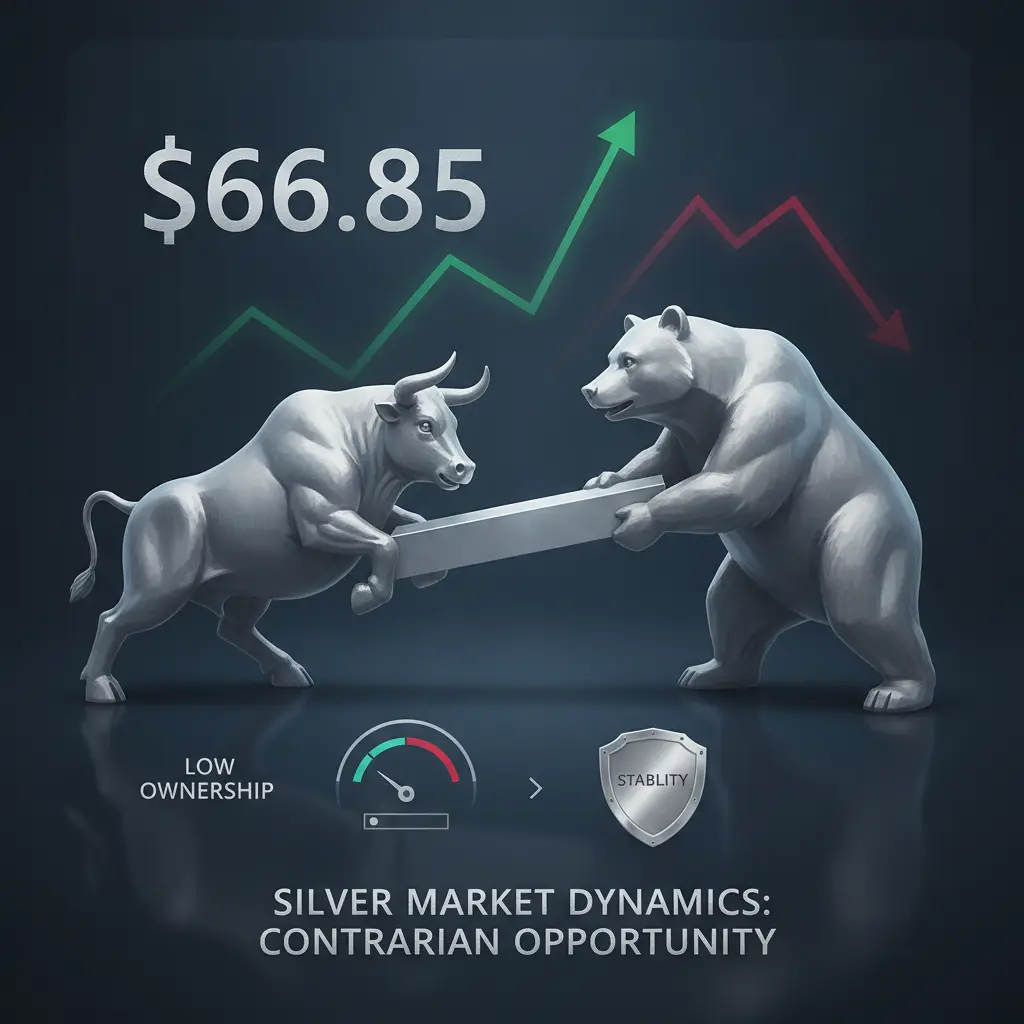
A recent report from GoldSilver declared that “Silver Is Down 47%. Almost Nobody Owns It.” This stark assessment paints a picture of a precious metal largely overlooked, perhaps even dismissed, by the broader investment community. While the past performance indicated in the report highlights a significant downturn, the current market for Silver presents a different, more stable landscape for those paying close attention. As of today, the live Silver price stands at $66.85 USD per troy ounce. Notably, the white metal has seen a 0% change over the last 24 hours, holding steady with no change in price. This current stability, juxtaposed against the sentiment of widespread disinterest, could signal a unique opportunity for contrarian investors. The adage “buy when there’s blood in the streets” might resonate here, especially if the asset is fundamentally undervalued due to a lack of popular demand rather than intrinsic weakness. Silver occupies a unique position in the commodities market, serving both as a monetary metal and a critical industrial component. Its demand is driven by everything from jewelry and investment to crucial applications in electronics, solar panels, and medical devices. This dual nature means its value can be influenced by global economic health, inflation concerns, and technological advancements. If “almost nobody owns it,” as GoldSilver suggests, then any future resurgence in either industrial demand or safe-haven appeal could find limited supply to meet renewed interest, potentially leading to significant price movements. For investors monitoring the precious metals space, Silver’s current valuation and quiet market behavior offer a compelling case for further investigation. While the headline highlights past struggles, the present market stability, combined with its essential role across various sectors, suggests that Silver might be a sleeping giant. Keeping an eye on this often-underappreciated asset could prove to be a shrewd long-term strategy. Read More
Leave a Reply
You must be logged in to post a comment.