
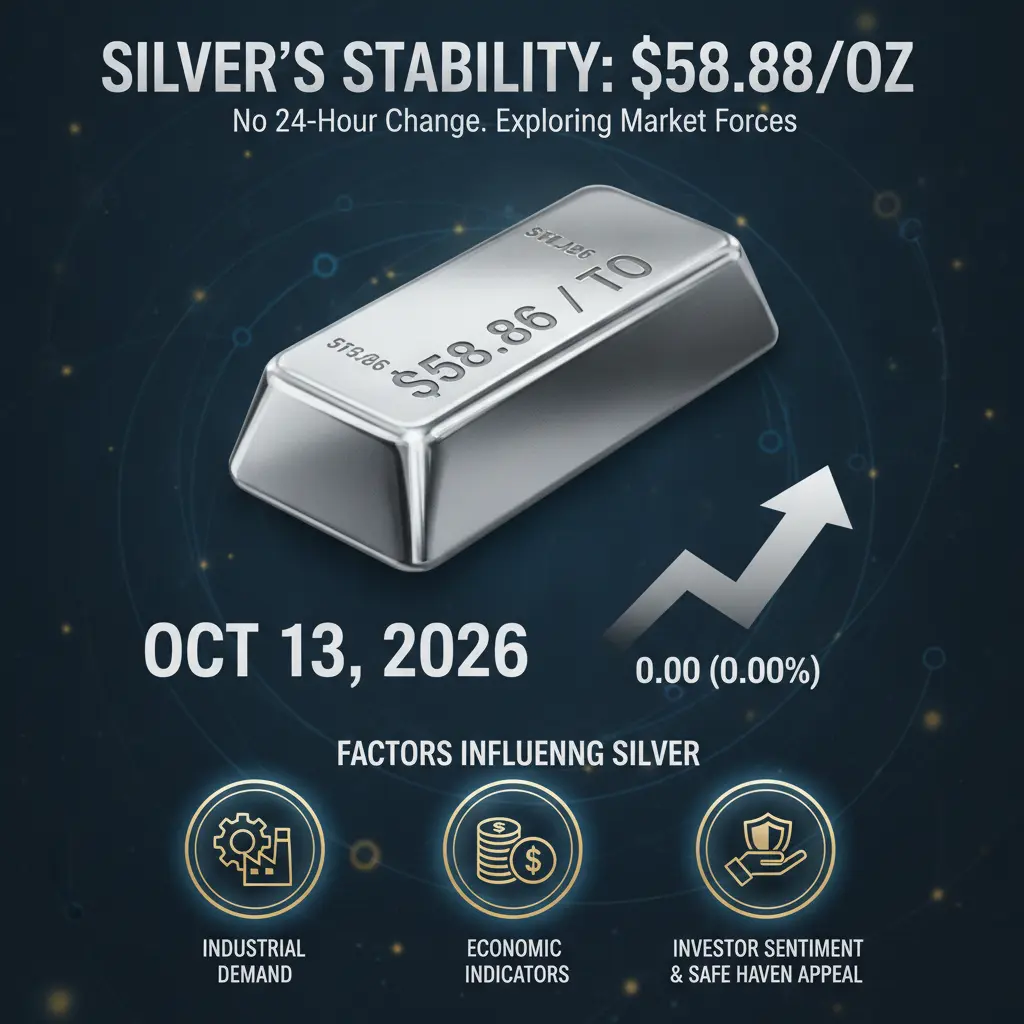
As of Tuesday, October 13, 2026, the precious metals market sees silver maintaining a stable course, with its price holding firm at $58.86 USD per troy ounce. This current valuation comes amidst broader market observations, as reported by Fortune.
Notably, silver has experienced zero change over the last 24 hours, recording a 0% movement. This flat performance suggests a period of consolidation, where buyers and sellers are finding equilibrium, or perhaps a moment of calm before potential volatility. Such stability often prompts investors to scrutinize underlying factors influencing the metal’s long-term trajectory.
Silver’s dual role as both an industrial metal and a safe-haven asset means its price is swayed by a diverse set of economic indicators. Industrial demand, particularly from sectors like electronics, solar energy, and medical applications, plays a crucial part in its valuation. Concurrently, its appeal as a hedge against inflation and economic uncertainty continues to draw attention from investors seeking to preserve wealth. The current lack of immediate price movement doesn’t diminish these fundamental drivers, but rather sets the stage for a more detailed analysis of global economic health and monetary policy decisions.
For those tracking the white metal, this steady state might represent an opportunity for re-evaluation. Whether viewing silver as a speculative investment or a long-term store of value, understanding its market dynamics is key. Talupa provides comprehensive, real-time data for those keen to monitor the live Silver price and explore its market movements.
While the immediate 24-hour period shows no significant shifts, the broader precious metals landscape remains dynamic. Investors will be keenly watching upcoming economic data releases and geopolitical developments for cues on silver’s next potential direction. Its current stability at $58.86 serves as a notable point of reference in the ongoing narrative of the global financial markets. Read More
Leave a Reply
You must be logged in to post a comment.