
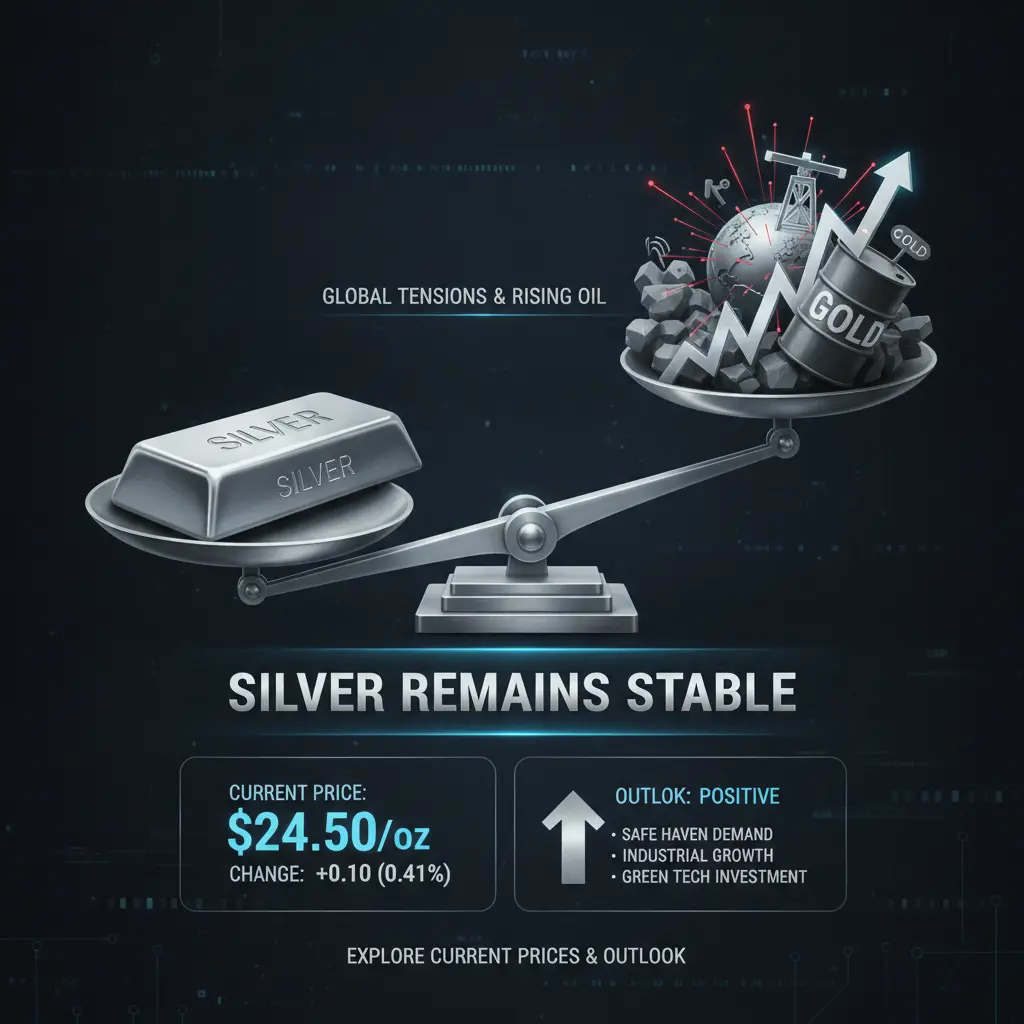
The precious metals market is currently navigating a complex landscape, as evidenced by recent movements in gold. BullionVault reported that gold managed to snap its recent downtrend, influenced by escalating geopolitical tensions surrounding the Iran war and a significant jump in oil prices and real rates. This shift in gold’s trajectory often serves as a barometer for the broader precious metals sector, including silver.
While gold reacted to these macro-economic and geopolitical headwinds, silver has demonstrated a degree of stability in the immediate term. The current live Silver price stands at $57.42 USD per troy ounce. Notably, the white metal has shown no significant movement over the past 24 hours, recording a 0% change, or a flat $0. This consistent pricing suggests that while gold is absorbing the immediate shockwaves of global events, silver’s unique dual identity – as both a safe-haven asset and a vital industrial commodity – is playing a balancing act.
The industrial demand for silver, essential in electronics, solar panels, and various green technologies, often provides a robust floor for its price, potentially offsetting some of the volatility seen in pure investment metals during times of uncertainty. However, the factors that propelled gold’s recovery – rising oil prices signaling potential inflation and shifts in real rates – are also critical for silver’s long-term outlook. Inflationary pressures tend to boost the appeal of both gold and silver as stores of value, while changes in real interest rates impact the opportunity cost of holding non-yielding assets.
As the global economic and geopolitical situation continues to evolve, market participants will be keenly watching how silver, often referred to as ‘poor man’s gold,’ responds. Its ability to maintain a steady course amidst significant movements in its golden counterpart highlights its distinct market dynamics. The coming weeks will reveal whether silver follows gold’s renewed upward momentum or continues its path of relative stability, guided by both industrial demand and broader investment sentiment. Read More
Leave a Reply
You must be logged in to post a comment.