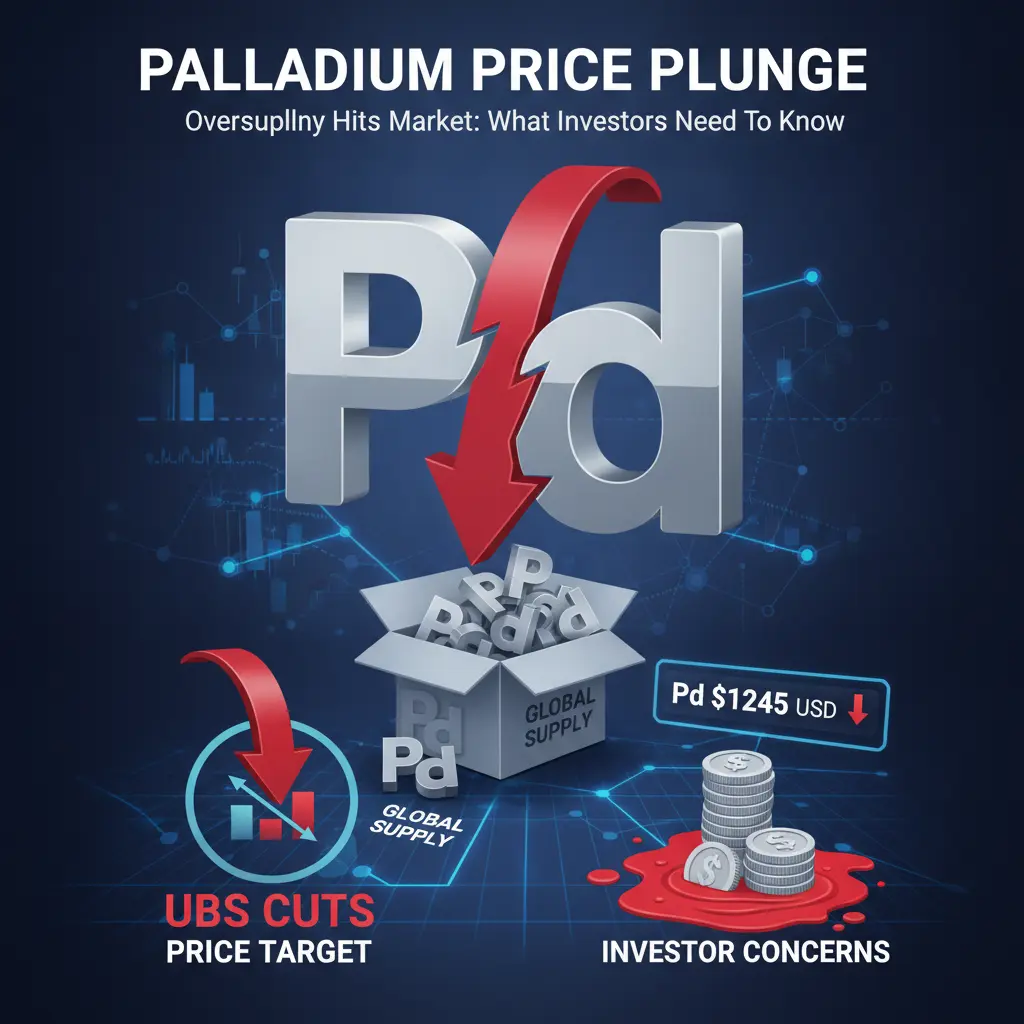
Palladium, a crucial precious metal primarily utilized in catalytic converters, is navigating a challenging market landscape as investment bank UBS recently announced a significant cut to its price target. The move, highlighted by Investing.com, comes amidst growing concerns over potential oversupply in the market, signaling a cautious outlook for the metal’s future trajectory.
The core of UBS’s revised forecast stems from an anticipated surplus of palladium. This oversupply could be influenced by several factors, including a potential slowdown in global automotive production, where palladium plays a vital role in reducing emissions. Additionally, advancements in recycling technologies and a gradual shift towards electric vehicles, which do not use traditional catalytic converters, could further dampen demand for palladium in the long term, contributing to the perceived surplus. These macroeconomic and technological shifts present significant headwinds for the industrial metal.
Despite these bearish pronouncements from financial institutions, the live market currently shows a degree of stability. As of today, the price of live Palladium price stands at $1245 USD per troy ounce. Interestingly, this figure reflects a 0% change over the last 24 hours, meaning its price has remained stable with no change of $0 during this period. This stability might suggest that while institutional concerns are rising, immediate market reactions have yet to fully materialize, or current demand is still balancing existing supply.
For investors monitoring the precious metals market, UBS’s revised outlook serves as a critical indicator. While the immediate price action of palladium appears calm, the underlying concerns about oversupply could exert downward pressure in the coming months. Market participants will be closely watching for further developments in the automotive sector and broader economic indicators to gauge the true impact of these oversupply fears on palladium’s valuation. Read More
Leave a Reply
You must be logged in to post a comment.